The union
is us.
The strike is over. The contract is signed. The work is not. What it pays, what it costs us, and how we get a say — in our own words.
We didn't go out over nothing.
Before the strike we were at $36.30 an hour (per members — confirm with your BA). The deal we took is $37.80 now, then $1.50 more every April 1 — which means we don't reach $40 an hour until April 2028. The full schedule, and what it means against inflation, is in the sections below.
We drive loaded trucks on public roads, run the loader, clean and chip the plant, and grease our own equipment. That's why we said no.
The cost of living outran our pay.
+77%That's how much the cost of living has climbed in Canada since 2000 (+77.4%, Statistics Canada CPI, August 2026) — and 19.1% in just the last five years. A wage that crawls up a buck-fifty a year only just keeps pace. Standing still is a pay cut you can feel at the pump and the checkout.
We still have power — together.
CBM, Dufferin and Innocon operators are all Teamsters Local 230, on agreements that all ran to March 2026. When one plant sets the pattern, it touches us all.
- Innocon settled first (per members). Whoever settles first shouldn't set the rate for everyone else — that's a question for the room.
- Three plants, one local. Together they put the concrete in the GTA. That weight hasn't gone anywhere.
- The GTA cannot pour concrete without us. That is leverage — no matter who tells you it's gone.
Solidarity wins. Ask B.C.
In 2022, 160 Teamsters and Operating Engineers walked out at Rempel Bros. in Greater Vancouver — and the Ocean Concrete and Allied Ready Mix members honoured their picket lines, shutting a dozen facilities.
5 weeks out. About 14% over four years. Plus language on scheduling and contracting out.
It held because the other plants refused to cross the picket lines — they would not let themselves be split. Today the Vancouver ready-mix top rate is $47.09 an hour (2026, BC Labour Relations Board). See the pay comparison below.
And in the U.S. — in July 2025, 300+ Teamsters were locked out at National Ready Mixed in Southern California for rejecting a concessions deal. The lockout ended after 27 days, with a three-year contract ratified 2-to-1. Holding the line works.
The fear they're selling you.
You'll hear: "The government will force you back," "the company won't give a cent," "you've got no leverage."
Here's the honest part — in Ontario, a government cannot just order you back to work. That takes back-to-work legislation the province has to actually pass: it isn't automatic, isn't instant, and isn't a given for a ready-mix dispute. (Federal workplaces are different — see the back-to-work section below.) "They'll force you back" is pressure, not a fact.
Get the real numbers.
| Confirm every number with your BA | Rate |
|---|---|
| Before the strike — CBM operator (GTA), per members | $36.30/hr |
| Now — CBM operator, per members | $37.80/hr |
| April 1, 2028 — first time over $40 | $40.80/hr |
| Vancouver ready-mix top rate (BC Labour Relations Board, 2026) * | $47.09/hr |
| Dufferin settled rate | |
| Innocon settled rate |
* A different market, shown for scale. The full comparison — B.C., Chicago in U.S. dollars, and our own local's sewer and watermain rate — is in the pay section below. Get the Dufferin and Innocon rates from your Business Agent and write them in.
It's a seasonal job.
This isn't 52 weeks of paycheques. We're ready-mix — when the pours stop, the layoffs start, and the company can keep us off the road for five or six months at a stretch.
That's the whole reason the rate matters so much. What we earn in the working season has to carry our families straight through the dead months. A wage that looks "okay" spread across twelve months is a wage you can't survive on when it only lands for six or seven.
Paid right, you build a cushion. Paid short, you're scraping by before the snow melts.
Proper pay means something put away for the off-season — enough to get you to spring with your head up. Short pay means an empty account by mid-winter. And a laid-off worker with nothing in reserve is a lot easier to pressure into "just take the deal." Don't let an empty off-season decide the next deal.
We just want to be treated like people.
We get painted as greedy. We're not. Take the dollars off the table and look at what's left — the things that actually grind a person down: being watched, being rushed, being doubted when we're sick. This is about dignity.
- Watched, but not fed. We run loaded trucks under dashcams that record our every move — but can't reliably get the time or relief to stop and eat a real meal on shift. They can afford the cameras. They can't afford us a lunch break?
- Sick notes they can't even demand. Call in sick and the company wants a doctor's note — even though, since October 2024, Ontario's Employment Standards Act says an employer cannot require a note from a health practitioner for your three job-protected sick days. Making a sick, broke worker pay a clinic to "prove it" isn't safety. It's distrust.
This work can cost a life.
A tragic accident involving a mixer is the kind of thing none of us forget. Heavy trucks, tight job sites, long hours, and constant pressure to turn one more load — when speed gets pushed ahead of safety, it's people who pay, on the road and behind the wheel. Fighting for sane hours, real breaks, and proper safety language isn't a money grab. It's about everyone making it home.
So when someone says this is just about a raise — they haven't sat in our seat.
Happy with a union that tells you to sit down and take it? Then nothing has to change. But if you're ready for representation that actually fights — on wages, on safety, on respect —
I'm ready — add my name →Pressure from our own side.
Be straight about what happened. After members voted to strike, the stewards and the board recommended the offer. Innocon settled first (per members), and then we took the deal too.
The principle is simple: a union's job is to back its members when they stand up, and members decide at the table — not the people presenting the deal. That's a question we settle the democratic way: in the room, and at the ballot box when this local elects its leadership.
The bargaining committee's job is to negotiate and bring the contract to the membership — then let the members decide. That's how ratification works. But when the same people presenting the deal are also the ones pushing you to accept it, where are you supposed to get a straight read on whether it's actually good? That's why this site exists. The numbers, the comparisons, the law — all of it, with no spin. Your vote. Your decision. Not theirs.
And here's the question to ask in the room: what happens after this contract? It's reported as a five-year deal (confirm with your BA — nobody has shown us the signed document). Five years from now, you're back at the table. Wouldn't you rather walk into that room with leverage — with members who've been paid properly, who've saved through the off-seasons, who aren't desperate?
A real union doesn't just negotiate one deal — it builds members strong enough to win the next one.
Proper pay now means money put away, families stable through the layoffs, and a membership that can hold the line when the contract comes up again. Short pay means broke members, empty reserves, and a bargaining table where the company already knows you can't afford to say no. That's not bargaining — that's surrender before you sit down.
Is the current committee building that strength — season by season, year by year? Or does the membership need to show up and demand it, so the next time we sit across from the company, they're the ones sweating?
The floor speaks.
You keep this city pouring. Here's what we're asking the floor — tap any answer and the ballot opens. Anonymous, about 60 seconds, and it counts automatically.
Tapping any answer opens the ballot. It does not collect your email and does not require you to sign in. The last box (name + plant) is optional — leave it blank and your answers stay anonymous.
Let's start organizing a new slate.
The contract is done. The work isn't. Change in this local comes the right way: by showing up, moving motions, and running and winning at the next election. Start now.
- Get the documents. Request the Local 230 bylaws and the IBT Constitution in writing — they spell out officer terms, the election timeline, and the recall rules.
- Check who's eligible to run. Under the Constitution you must be in continuous good standing and working in the craft for 24 consecutive months before nomination. Find your candidates now.
- Build the list. Quietly line up a full slate — every executive board seat — plus members willing to scrutineer and get out the vote.
- Document everything. Dates, what was said, how votes were run. A clean record is what makes a challenge or a campaign stick.
- Talk to Teamsters Canada and, if needed, a labour lawyer or the Ontario Labour Relations Board. Know your rights before you act.
Be ready when election time comes. Start with the bylaws, the dates and the people you trust.
Your details go only to the organizer holding this list — never posted, never shared, and the form does not track you for ads. Give only what you are comfortable giving.
What's changed — updated September 28, 2026
The strike is over. The math isn't.
Per members — confirm with your steward or business agent The CBM strike is over and the contract is renewed. The rate is $37.80 an hour right now. It goes up $1.50 an hour every April 1.
| When | Rate (per members) | What that $1.50 works out to |
|---|---|---|
| Now | $37.80 | +4.1% on the pre-strike $36.30 (per members) |
| April 1, 2027 | $39.30 | +4.0% |
| April 1, 2028 | $40.80 | +3.8% — first time over $40 |
| April 1, 2029 | $42.30 | +3.7% |
| April 1, 2030 | $43.80 | +3.5% |
Read the shaded row again. We do not see $40 an hour until April 2028. That is a year and a half from now.
What nobody has confirmed
- The term. The offer was described as five years. We have not seen the signed document.
- Retro pay. Paid, per members — but nobody has seen the amount or the period in writing. Confirm both with your steward or business agent.
- Innocon's rate. Dufferin's rate. Per members — confirm with your BA Innocon settled first. Nobody has published its number. We looked. Nobody has published Dufferin's either. Those two boxes on our wage table are still blank.
Ask for the ratified agreement in writing. It is our contract. We should be able to read it.
What is on the record — verified
- Nothing filed yet. Ontario's collective-agreement library shows the CBM (176 employees in the main unit), Dufferin and Innocon GTA agreements all ran April 1, 2021 to March 31, 2026, and as of September 23 no renewal had been filed for any of them.798081 Filing lags signing, so that is not proof nothing was ratified. It means the new deal is not on the public record yet.
- Our strike made no news. As of September 25, no news story, no union release and no company statement about it had turned up. We checked the Toronto Star, CBC, Global, CP24, Daily Commercial News and Teamsters Canada's own site. Nothing. That is a fact about our profile, not a complaint. It is also a reason to build our own channel.
- The parent company told investors prices and volumes are up. On August 14, Votorantim Cimentos reported second-quarter North America revenue of R$2.3 billion (Brazilian reais), up 6% in local currency, "reflecting positive evolutions in prices and volumes." Global adjusted EBITDA rose 17% excluding currency effects. North America adjusted EBITDA, though, fell 2% in local currency on higher operating costs — prices and volumes up, profit slightly down. The report does not mention Canada, Ontario, ready-mix or a strike.9
- Prices kept climbing while we were out. Statistics Canada: inflation ran 3.0% in the year to August. Groceries are up 29.0% in five years. Gasoline is up 22.8% in a year.1
- Ottawa moved on strike law. Bill C-39, the Building Canada Strong Act, got first reading September 21.76 It is federal law for federal workplaces — rail, ports, airlines, the post office. “A minister can't order us back” has what it does and what it cannot reach.33
- Ontario's top court ruled on back-to-work laws. February 6, 2026: they breach the right to strike, but survive if they send the dispute to arbitration. The plain-language version is under “A minister can't order us back.”41
- Chicago and B.C. — checked. Members reported Chicago at about US$50 and B.C. at up to about C$40. The record says: B.C.'s Lower Mainland is well past $40 — Heidelberg's Vancouver operators are at a C$47.09 top rate this year (after 1,000 hours; $42.04 in the first 499).61 Chicago's US$50 is real for one contract and unconfirmed for the plants themselves: Local 786 operators under the construction contractors' agreement are at US$56.33 base since June,70 while the one producer number on the public record is Ozinga's own job ad at US$37.46 to US$46.83.73 The full table is under “A flat $1.50 gets smaller every year.”
- Dufferin. Local 230's announcements page lists ratifications at Dufferin Malton, Bradford, Whitby/Bowmanville and Peterborough — "monetary improvements", no figures, no dates — and the page was last edited in June 2021, so none of them is this round.5882 Ask at the next meeting.
Next Union Membership Meeting — date not yet announced. Write it here when you hear it: The September 27 one was 9:30 AM at Royal Canadian Legion Branch 345, 81 Peard Rd (Victoria Park & St. Clair).
Four demands, still open: every meeting online, every time · fix the union website · straight answers on our yards · the benefit plan answers the phone. Each one needs a date. The scorecard is under “We put four demands on the table.”
Same union. Same kind of work. Not the same pay.
Signed agreements and official rate sheets, read in late September 2026. Where nobody could find the document, the card says so. Every number here is for you to check with your steward or BA before you repeat it.
Read it right.
Base vs. package. Base is what lands on your cheque for every hour. Package adds what the company pays into health and pension on top. Compare base to base, package to package. Chicago’s US$78 is a package; our $37.80 is base.
Different markets, different currencies, different contracts. These numbers are for scale — what the same work is worth elsewhere, not what we’re promised. A top-rate operator in Vancouver is at $47.09. A mixer operator on public work in Chicago is at US$48 base, about C$68.
The one that should sting: our own local already negotiates $47.42 base for mobile-mixer operators on sewer and watermain jobs. Same Local 230. Same city.
Member-to-member information, not an official communication of Teamsters Local 230 or the IBT. Toronto figures are member reports until the 2026 agreements are filed with the Ontario Ministry of Labour; B.C. figures are from signed agreements on the BC Labour Relations Board registry; Chicago figures are from the Illinois Department of Labor, the MARBA wage summary and an Ozinga posting. Verify every figure with your steward or BA.
What $1.50 actually buys
A flat $1.50 gets smaller every year.
A dollar amount is not a percentage. On the pre-strike $36.30 (per members), $1.50 was a 4.1% raise. On $42.30 it is 3.5%. Same money. Smaller raise. Every April.
The short version. $1.50 on the pre-strike $36.30 (per members) was a 4.1% raise. $1.50 on $42.30 is 3.5%. Prices are running 3.0% a year, groceries about 5%.1 The four steps still to come add 15.9% to today's $37.80 by 2030 — about 20.7% if you count from $36.30 — and the last five years of prices took 19.1%.2 This deal gets back roughly what we lost. It does not get ahead. Burnco Calgary ($42.59), Heidelberg Vancouver ($47.09 top rate) and our own road-building members hired before 2019 ($46.22) are all past $42 today; Vancouver adds $5.70 an hour in pension, road building $10.50.156113
Statistics Canada's price index sat at 169.8 in August 2026. It was 142.6 in August 2021 and 95.7 in August 2000.2 That is +19.1% in five years and +77.4% since 2000 — our old "+74%" line is out of date, in the wrong direction. A dollar earned in August 2021 buys about 84 cents' worth today.
Does $1.50 keep up?
Swipe the table sideways →
| Step | Raise | vs prices at 3.0%/yr (today's pace)1 | vs the last 5 years' pace (about 3.6%/yr)2 |
|---|---|---|---|
| 2026 ($36.30 → $37.80, per members) | 4.1% | ahead by 1.1 points | ahead by 0.6 |
| Apr 2027 (→ $39.30) | 4.0% | ahead by 1.0 | ahead by 0.4 |
| Apr 2028 (→ $40.80) | 3.8% | ahead by 0.8 | ahead by 0.3 |
| Apr 2029 (→ $42.30) | 3.7% | ahead by 0.7 | ahead by 0.1 |
| Apr 2030 (→ $43.80) | 3.5% | ahead by 0.5 | even |
Straight answer: if inflation holds at 3.0% the whole way, the schedule stays a hair ahead — by about one point in year one, shrinking to half a point by 2030. If the next five years look like the last five, the last steps are a wash. Against the grocery bill — up 29.0% in five years, about 5% a year — we lose every single year. And if the term really is five years, there is a stretch after April 2030 with no step at all while prices keep moving.
The four steps still to come add $6.00 to today's $37.80 — 15.9% by 2030 — about 20.7% if you count from the pre-strike $36.30 members report. The last five years of prices cost 19.1%.2 So over the next four steps the schedule adds about what prices did in the last five years. If prices keep doing that, it treads water — from a base that already fell behind.
What other ready-mix operators signed
See every deal we compared
Swipe the table sideways →
| Where | Rate | Term | Raise |
|---|---|---|---|
| CBM, Toronto (per members) | $37.80 now → $43.80 Apr 2030 | described as 5 yrs | $1.50 flat each April |
| Amrize (Lafarge) Calgary, Teamsters 362 — signed May 12, 202614 | $39.21 → $42.41 Apr 2028 | 3 yrs | $1.20, $1.00, $1.00, plus $4.00/hr pension rising to $4.10 |
| Burnco Calgary, Teamsters 362, 88 members, 4-axle15 | $39.37 → $44.09 June 2027 | 3 yrs | 5.0%, 3.0%, 3.5% |
| Heidelberg Fort McMurray, Teamsters 362, about 10 members, 4+ axle1660 | $42.36 → $46.76 July 2028 | to Apr 2029 | 2.5% a year — and still ends near $47, because it started at $42 |
| Heidelberg Okanagan (Kelowna, Kamloops, Penticton), Teamsters 213 — after a 94-day winter strike1767 | $37.77 (Jan 2025) → $42.08 Jan 2028 | 4 yrs | 7%, 4.5%, 3%, 3.5%; pension $5.25/hr; over $40 only in Jan 2027 |
| Heidelberg Saskatoon, Teamsters 395 — ratified Dec 4, 2025, 89% yes18 | not published | 4 yrs | 14% over the term, incl. retro |
| Bétonnières du Golfe, Quebec (UFCW) — ready-mix, loader and mechanic members19 | not published | 4 yrs to June 2029 | 12% retro to July 2025, then 3%, 2.5%, then CPI-indexed 2%–4% in 2028 |
| Heidelberg Greater Vancouver (the old Ocean and Rempel yards), Teamsters 213 — 2024–202661 | $43.85 (2024) → $47.09 top rate Jan 2026 ($42.04 in the first 499 hours), plus $2.25/hr lunch-in-lieu premium | 3 yrs | about 3.7%, 3.5%; pension $5.30 → $5.70/hr |
| Lafarge Cardinal Concrete (Squamish/Whistler), Teamsters 213 — 2024–202868 | $38.09 → $41.54 2028 | 5 yrs | 5%, 2.5%, 2.25%, 2%, 2% — with a clause lifting wages to Vancouver CPI when CPI beats the raise; pension $5.20 → $6.00/hr |
| Chicago, Teamsters Local 786 under the construction contractors' (MARBA) agreement — mixer trucks 7 yd and over; US dollars70 | US$50.43 (June 2023) → US$56.33 June 2026 | 4 yrs | $2.10, $1.90, $1.90 a year; health and pension paid on top by the week |
| Chicago-area ready-mix plant, Ozinga job ad, union — US dollars73 | US$37.46 – US$46.83 | — | producers' contract not published; benefits on top |
| Local 230 road building (TARBA), truck classification hired before May 201913 | $45.17 → $47.26 May 2027 | 3 yrs | plus $10.25–$10.75/hr pension; total package $63.94–$66.94 |
| Ontario ICI trades, 2025 round — carpenters, labourers, plumbers, operating engineers22 | — | 3 yrs | 7% to 10%; carpenters and LIUNA 8%, Toronto plumbers 9.7%, operating engineers $6.75/hr |
Three things jump off that table. First, a Calgary ready-mix operator at the same company family that co-owns Innocon reaches $42.41 in April 2028 — the month we reach $40.80 — with a $4-an-hour pension on top.14 Second, our own local already signs $45 to $47 base rates with $10-plus pension on road work in this city.13 Local 230 knows how to get those numbers. The same agreement also carries a warning: people hired after May 2019 get $35.12 to $37.30 on the same trucks.13 Two tiers is what to refuse in any long deal. Third, Vancouver ready-mix operators at the same Heidelberg group top out at $47.09 — more than nine dollars over us — on a three-year deal that ends this December.61
Chicago and B.C. — what members said, what the record says
- B.C.: "up to about $40" undersells it. Heidelberg's Greater Vancouver operators (the old Ocean and Rempel yards) top out at C$45.49 in 2025 and C$47.09 from January 2026 (that is the full rate after 1,000 hours; the first 499 hours pay $42.04), plus a $2.25-an-hour premium paid in lieu of the lunch break and $5.70 an hour pension.61 Rempel's full rate crossed $40 in September 2022; Ocean's did in January 2023.6566 The 2024 renewal that produced those rates was ratified 84% after a strike notice had been served.62 The Interior is lower: Okanagan operators reach $40.65 only in January 2027,67 and Kelowna Ready-Mix was at $35.80 in 2024.69
- Chicago: US$50 is real for one contract, unconfirmed for the plants. Teamsters Local 786 operators covered by the Chicago-area construction contractors' agreement — its classifications include mixer trucks of seven yards and over — went from US$42.76 in 201971 to US$50.43 in June 2023 and US$56.33 in June 2026, with health and welfare ($461 a week) and pension ($408 a week) paid on top.70 On public-works jobs, Cook County's posted prevailing rate for that classification is US$48.00 base plus US$30.19 in fringes.72 But the separate contract between Local 786 and the ready-mix producers is not published anywhere we looked. The only producer number on the record is Ozinga's own ad for a union ready-mix job: US$37.46 to US$46.83 an hour, benefits on top.73 Ozinga's own FAQ says "Union wages are based on the Teamsters Local and level of experience" and "40 hours are not guaranteed."74 US dollars throughout; no conversion attempted.
What the work bills out at
Dufferin's 2026 price list — the other big producer, same city — puts 30 MPa exposure-class concrete at $283 a cubic metre. A 9 m³ load is $2,547 before the $9/m³ enviro fee, the $22/m³ winter charge, after-hours charges of $40 to $70/m³, or the Saturday $30/m³. After 60 minutes on site, waiting time bills at $10 a minute — $600 an hour for a truck standing still.8 A CBM operator in that seat, per members: $37.80. The list also carries a fuel surcharge on a sliding scale up to $10/m³.8 The companies index their side to costs. Our side is fixed.
What a month costs
- Rent. Toronto's average asking rent was $2,571 in August. Two-bedrooms averaged $2,939 (still rising), three-bedrooms $3,642 (up 3.5%).5 A two-bedroom is $35,268 a year. At $37.80 for 40 hours, 52 weeks, a full year grosses $78,624 — the two-bedroom takes 45% of it. And layoffs mean few of us see 52 weeks. A one-bedroom, unfurnished, averaged $1,947 on liv.rent's listings.6 Rents have eased a little from the peak; that is the one break we have had, and it does not undo five years.
- Gas. CAA's national average was 183.4¢ a litre on September 25, against 132.5¢ a year earlier — up 50.9 cents, about 38%.4 Statistics Canada puts gasoline up 22.8% in the year to August.1 Anyone with a long drive to the yard can watch a $1.50 raise disappear at the pump.
- Even minimum wage is indexed. Ontario's general minimum wage goes to $17.95 on October 1, from $17.60, because the law ties it to the Ontario CPI every year (1.9% this time).7 Ontario's own all-items rate was running 2.0% in July.3 Automatic. By law. A fixed $1.50 a year, on the five-year term members describe, gives a licensed mixer operator less inflation protection than the province writes into the minimum wage.
Why the ground keeps moving under a five-year deal
- Flat dollars shrink. $1.50 was 4.1% on the pre-strike rate and will be 3.5% in 2030. A percentage raise holds its size. A dollar raise does not.
- No index. Other deals signed this year carry one. Canada Post's new agreements tie the later years to the CPI.32 Bétonnières du Golfe's 2028 raise is CPI-indexed, floor 2%, ceiling 4%.19 Unifor's Ford deal keeps cost-of-living adjustments.24 And it exists in ready-mix: Lafarge's Cardinal Concrete in Squamish and Whistler, a Teamsters 213 deal, adjusts wages each January to Vancouver's CPI whenever CPI beats the negotiated raise.68 Ours, per members, has nothing of the kind.
- The starting line is the whole game. Fort McMurray operators get only 2.5% a year and still finish at $46.76 — because they started at $42.36.16 Over a long term, where you start decides where you end. We start at $37.80.
- The other side's numbers float. Fuel surcharges, winter charges, waiting time by the minute.8 Revenue "reflecting positive evolutions in prices and volumes."9 They adjust every quarter. We are locked for the term — five years, per members, which would run to March 2031.
Living wage — a gap, not a number. The Ontario Living Wage Network's 2026 GTA rate is not out yet (it usually lands in November). We saw a November 2025 figure quoted but could not check it against the Network's own page, so it is not printed here. Ask at the next meeting who is going to pull the real number when it publishes.
Why now, not in five years
The first plant to settle sets the number.
That is what pattern bargaining means: one plant settles, the rest get held to that number. It can work for you or against you. This round, per members, the plant we know least about went first — and nobody has shown us its number.
How the big unions run it
Unifor bargains with one automaker first, and that deal becomes the pattern for the other two. In 2023 it picked Ford because "the company is in the best position to reach an agreement that delivers on the needs of our members and sets a strong pattern."23 Ford settled at 10%, 2% and 3% with cost-of-living adjustments turned back on, ratified 54%.75 Same play in 2026: Ford ratified July 19 — 3% a year plus COLA, 74% yes24 — then GM reached a tentative deal August 22 and ratified it August 30. Stellantis was still at impasse on September 24 over the Brampton plant.25
The rule is simple. Go to the employer best able to pay. Win there. Hold the others to it.
We ran it backwards — as far as anyone can tell
Per members — confirm with your BA Innocon settled first. We have never seen its number. Nobody has published it. We looked. So nobody can say whether $37.80 matches it, beats it or sits under it. That is question one for the hall.
And "smallest" needs a correction. Innocon says it has "over 450 employees distributed around 18 sites in the GTA" and calls itself "the largest provider of innovative and sustainable concrete solutions in the GTA."12 It is a joint venture of Lafarge Canada and Heidelberg,12 and its own website now names the joint owners as Amrize and Lehigh, "both world leaders in construction materials."88 By certified plant count Innocon may have the fewest of the three — that count still has to be verified before anyone quotes it. Either way, the first number set this round was one nobody on our side has seen. Unifor's rule is to win the number in the open, at the strongest table, first. This round the first number was set out of sight.
Holding out gets you to the pattern — not under it
Quebec, 2025. Residential construction was the sector the employers wanted to settle under everyone else. The final pre-strike offer was 18% over four years.27 Workers walked at midnight, May 28.27 Three weeks later the deal was 8% at signing plus arbitration for 2026–2028 with a floor of 18% and a ceiling of 24.35%.26 The arbitrator's award in February 2026 came in at 22% for heavy residential and 23.5% for light residential — at or above the 22% (8%, 5%, 5% and 4%) settled in the other construction sectors.2878 Three weeks out. Same pattern as everyone else, or better.
B.C., 2022 and 2025. Lower Mainland, May 2022: 160 Rempel operators struck for five weeks, and the Ocean and Allied members honoured the lines — stopping 12 facilities that supply about 35% of the region's concrete.64 The four-year deal came in at about 14%, ratified 62 to 34.63 Their full rate passed $40 that September and sits at $47.09 today.6561 Interior, 2025: operators at Heidelberg's Kelowna, Kamloops and Penticton yards held a 94-day strike from January 21, through minus-17 weather, for 7%, 4.5%, 3% and 3.5%.1777 Same Heidelberg that co-owns Innocon. Footnote: even after that strike, the Interior rate does not cross $40 until January 2027, because it started at $35.30.67 The starting line, again.
Square one, five years from now
The schedule ends at $43.80 in April 2030. Amrize's Calgary operators reach $42.41 in April 202814 and Burnco's reach $44.09 in June 202715 — both on three-year deals, so both will likely have bargained again before we do. If we walk into the next table the way we walked into this one — broke from the dead months, split by plant, not talking to each other — we start from the same place. Or lower.
Lower looks like this. Béton Provincial, Quebec. Twenty-five workers at Saint-Eustache, locked out since June 6, 2026, after turning down an offer with a two-year wage freeze and 3.8% over five years.20 About 50 members at LaSalle and Longueuil, locked out since December 5, 2024; the offer there was a freeze to 2027, then 2% and 2%, with the 5.5% pension contribution swapped for a 50-cent premium.21 According to the CSN, on July 28, 2026 the Tribunal administratif du travail found the company had approached 18 of the 25 Saint-Eustache workers directly with individual offers, and ordered it to stop and to bargain with diligence and in good faith.20 That is a small unit fighting alone. CBM and Dufferin together are not that — unless we choose to be.
The other direction looks like this. In 2023 the UAW's 46-day strike took the Big Three's combined offers from $12 billion to over $23 billion — 25% over the contract, COLA restored, wage tiers ended.4859 The people running that strike were a reform slate that had won by fewer than 500 votes on 14% turnout.4950
And the leverage is real, in the industry's own words. Concrete Ontario told the City in January that concrete "must then be delivered within 90 to 120 minutes of initial mixing" and that "traffic congestion quite simply will not allow for effective concrete delivery from outside of Toronto."10 CBM's own letter the same month: "Construction of new residential areas is dependent on the concrete industry."11 Nobody can truck the GTA's concrete in from somewhere else. They said so, on the public record.
Why now and not 2031 (if the term is what members describe): because the people who will sit at the next table are whoever we start organizing today. The rulebook is “A new slate, step by step.” The scorecard from September 27 is under “We put four demands on the table.”
Next Union Membership Meeting — date not yet announced. Write it here when you hear it: The September 27 one was 9:30 AM at Royal Canadian Legion Branch 345, 81 Peard Rd (Victoria Park & St. Clair).
Four demands, still open: every meeting online, every time · fix the union website · straight answers on our yards · the benefit plan answers the phone. Each one needs a date. The scorecard is under “We put four demands on the table.”
Back-to-work law — what changed since 2024
A minister can't order us back. A bill has to pass.
Two rulebooks. Federal law for rail, ports, airlines and the post office. Ontario law for us. Don't let anyone blur them.
The federal tool is not ours
Every federal back-to-work order you heard about in 2024 and 2025 came from section 107 of the Canada Labour Code. The government's own list of section 107 referrals runs to ten, from July 2023 to August 2025: West Coast ports (twice), ICS Courier, WestJet mechanics, CN and CPKC, the ports of Montreal and Quebec, Canada Post, Air Canada.36 No construction. No concrete. No Ontario employer under provincial law. The one big provincial example, Alberta's October 2025 law ending the teachers' strike, was exactly that — a bill the legislature had to pass, using the notwithstanding clause.85 Our agreements run under Ontario's Labour Relations Act45 and sit in Ontario's own collective-agreement library.79
One caveat. We could not find anyone who has written, in so many words, that Bill C-39 cannot touch an Ontario ready-mix strike. The list of what section 107 has ever been used on says it can't. Ask the business agent to confirm it in writing.
What Ottawa is doing right now
Bill C-39, the Building Canada Strong Act, got first reading on September 21, 2026.76 It would wrap section 107 in a process: a special mediator appointed by day 75 of conciliation, a 21-day mediation, a report made public after five days, and a "national impact" assessment before the minister can act.33 Teamsters Canada said the next day that the bill "fails to protect the right to strike" — it writes the power into law instead of repealing it, and shields the orders from every challenge except a constitutional one.34 The minister called section 107 an "in-emergency-break-glass kind of tool" and said "it is a high bar to establish a national interest."35 The Canadian Labour Congress said the bill "explicitly gives government the power to end legal strikes"35 and, the next day, that unions were "reviewing their legal and other options."87
An order is not the same as going back
Air Canada, August 2025. Flight attendants walked just after midnight on August 16. Within 12 hours the minister invoked section 107 and the board ordered them back. They did not go. On August 18 the board declared the strike illegal. A tentative deal came overnight on August 19 — three days after the walkout.37 Members then voted 99.1% against the September wage offer, and an arbitrator set the wages in February 2026: 8% to 13% in year one, then 3%, 2.5% and 2.75%, plus ground-duty pay at 60% of the hourly rate rising to 70%.38 The union said the award fell short of what it sought on wages.38 Both halves matter. Standing firm won pay for ground time that had never been paid. Arbitration set wages below what the members voted for.
WestJet, August 2026. About 4,400 flight attendants walked out early Sunday, August 2. Tentative deal Monday afternoon. No section 107.39 The threat of an order is not an order.
The courts have not settled it
The federal labour board ruled in 2025 that the words of section 107 do not, on their own, break the Charter, and that the board cannot review a minister's direction even if it ends a lawful strike.40 The postal workers took it to Federal Court,40 and the rail and port cases are still in the courts too.86 We found no court ruling on whether section 107 is constitutional as of September 25, 2026; the latest reporting that week still calls the challenges ongoing.86 If someone tells you the courts have settled it, ask for the case name.
What Ontario law says today
On February 6, 2026 the Ontario Court of Appeal decided two back-to-work cases: the 2017 college strike (OPSEU v. Ontario, 2026 ONCA 74) and the 2018 postal strike (CUPW v. Canada, 2026 ONCA 75). Both laws breached the Charter right to strike. Both were upheld anyway, because each sent the dispute to binding arbitration — and the court said governments get a lot of room on questions like this.41
So: Queen's Park cannot decree us back. It would have to pass a bill through the Legislature — debated, voted, in public. If it ever did, with arbitration attached, these rulings say the bill would likely survive a Charter challenge. The real risk is not being ordered back with nothing. It is being ordered into arbitration. What stops it is politics, not the courts. We found no record of Ontario ever using back-to-work legislation on ready-mix, or on any private-sector employer — and the sources that would settle that could not be read. Question for the next meeting.
"Final" is not final
Canada Post's May 28, 2025 "final offers": 6%, 3%, 2%, 2% over four years, plus a $1,000 (urban) or $500 (rural) signing bonus.29 Ottawa forced a vote on them. About 69% of members in each unit said no.3031 Ten months later they ratified a deal at 89% and 85.9%: 6.5% in year one, 3% in year two, and the later years tied to the Consumer Price Index, running to January 2029.32 Saying no to a deal they were told to take got them a better one — with inflation protection the "final" offer never had.
This section is general information, not legal advice. Laws change and every dispute is different. If you need legal advice, talk to a labour lawyer.
The Innocon question — open floor
Innocon went first. Now what?
Per members, Innocon settled first. Three questions for the floor, with the case for and against each. No names, no motives. You decide.
What we can verify about Innocon
- Innocon Inc. is a joint venture between Lafarge Canada and Heidelberg, per Lafarge's own July 2024 release.12 Innocon's own website now names the joint owners as Amrize and Lehigh.88
- It says it has "over 450 employees distributed around 18 sites in the GTA" and calls itself "the largest provider of innovative and sustainable concrete solutions in the GTA."12
- Per members — confirm with your BA It settled first this round. Its rate has not been published anywhere we looked.
- Plant count: by Concrete Ontario's certified-plant list, Innocon may have the fewest of the three. The count still has to be verified before anyone quotes it.
- Same benefit trust? The trust's booklet gives Dufferin its own hour-bank rule but does not list the participating employers.53 Confirm that CBM and Innocon are in the same trust before anyone builds an argument on it.
Our old line was "Innocon is the smallest of the plants." By employees and sites, Innocon says otherwise. By certified plants, it may be. We are fixing the wording so nobody can pick it apart.
Question 1 — Should whoever settles first set the number for all three plants?
For one number, all three plants
- One local, one hall, one benefit trust (confirm that last one). Splitting the pattern splits the leverage.
- Three plants under one local, in a city whose own industry told the City that concrete cannot be trucked in from outside and that housing depends on it.1011
- Pattern bargaining only works if everyone is held to the same number — including the plant that settles first.
Against letting the first plant set it
- Whoever settles first sets the floor. This round the plant that reportedly went first is the one we know least about — and we never saw its number.
- A pattern set at a table we never saw is a ceiling we never argued. Unifor picks the strongest table first for a reason.23
- "Tied together" only means something if the plants are actually talking. Right now the tie runs through the hall, not between members.
Question 2 — Do we build direct operator-to-operator ties across CBM, Dufferin and Innocon?
For
- Nobody can peel off a plant that is talking to the other two every week.
- It costs nothing but time, and it is what pattern bargaining runs on.
- The Fresno local that changed leadership in December spent years on it first: "For years now we've been educating members and training leaders. This election victory didn't come out of nowhere."47
- It fixes the "no news" problem. If nobody covers us, we cover us.
Against
- It is unpaid work on top of the job, in a trade where the dead months already eat the year.
- Without the hall's lists, it is one phone tree at a time.
- Some will say it goes around the elected reps. The answer is that talking to each other is not a bylaw violation — but expect the argument.
Question 3 — Current slate with demands and deadlines, or a new one?
Push the current slate — for and against
- For: fastest route. No election needed. The four demands from the September 27 meeting are concrete and testable: meetings online, website fixed, answers on the yards, benefit plan answering the phone.
- For: a written request for the audited financial statement is a legal right today, whoever holds office.45
- Against: a demand without a deadline is a wish. Set dates or don't bother.
- Against: if nothing moves by the date, the months are gone and the election calendar has not waited.
Run a new slate — for and against
- For: the Constitution gives a clear path (see “A new slate, step by step”), and reform slates have won on narrow margins — 60–40 in Fresno,47 fewer than 500 votes in the UAW.49
- For: it settles the "pressure from our own side" question at the ballot box, where it belongs.
- Against: terms run three to five years,4244 so the next election may be a long way off. We do not know the date. Ask.
- Against: eligibility rules — 24 months in the craft, continuous good standing, possibly meeting attendance — can knock candidates off the ballot.4243 A slate that has not done the homework loses before the vote.
- Against: a membership split in an election is a membership split at the next table, unless the slate is built across all three plants.
These are not either/or. Members can push the current slate with deadlines and build the network and prepare a slate in case the deadlines pass. All three can start on the same day. What the floor decides is up to the floor — that is why the next meeting matters.
Next Union Membership Meeting — date not yet announced. Write it here when you hear it: The September 27 one was 9:30 AM at Royal Canadian Legion Branch 345, 81 Peard Rd (Victoria Park & St. Clair).
Four demands, still open: every meeting online, every time · fix the union website · straight answers on our yards · the benefit plan answers the phone. Each one needs a date. The scorecard is under “We put four demands on the table.”
The rulebook
A new slate, step by step.
Everything below comes from the IBT Constitution, the IBT's own election guidelines and Ontario's Labour Relations Act. None of it needs anyone's permission.
- Get the rules in writingLocal 230's bylaws are not online and we could not find them anywhere. Ask for them. Another Canadian local's bylaws say the election rules are in "the Bylaws and International Constitution which are available upon request."44 Get the IBT Constitution42 and the 2022 election guidelines43 too. Note: the June 2026 Convention amended the Constitution83 and the new booklet is not posted yet. Everything cited here is the 2021 text. Ask the hall for the 2026 version.
- Know the calendarNominations happen in September, October or November and elections in October, November or December; the bylaws pick the month.42 Terms are at least three years, and can be four or five if the bylaws say so.42 The Alberta local's bylaws, for example, say officers are elected "not less often than once every five (5) years."44 Three questions for the hall: when was the last election, when is the next one, and which month do our bylaws set for nominations.
- Be eligible — and prove itTo run you need 24 consecutive months of continuous good standing and active employment in the craft before the nomination month.42 Seasonal layoff is not a break if you were seeking and available for craft work and not working outside the craft.42 A withdrawal card during layoff is a break unless it is redeposited the very next month with dues paid — so keep dues current through the dead months.42 If our bylaws have a meeting-attendance rule (up to 50% of meetings in 24 months), the IBT says it "may still be enforced in Canada, provided the Local Union has maintained adequate records."43 Start attending. Keep your own record. Then get a written eligibility ruling: the Secretary-Treasurer must answer within 5 days of a request, and a slate can ask for rulings on all its members at once.4243
- Fill every seatEvery executive board seat, plus trustees. Each nominee needs a nominator and a seconder, both members in good standing and neither the nominee, with dues paid through the month before the meeting.42 Nominations are made at a membership meeting.42 Accept on the spot, or in writing if absent. One office each. No withdrawing once ballots are printed.42
- Campaign by the bookThe local must honour reasonable requests to mail campaign literature to the membership at the candidate's expense — at least one mailing each — and "campaign literature cannot be censored by the Local Union regardless of its contents." Official mailing and email lists used for union business must be available to all candidates.43
- Guard the voteSecret ballot, held not earlier than 30 days after nominations, polls open at least six hours between 8 a.m. and 8 p.m.42 Every nominee has the right to at least one observer at each polling place and to be present at the count.42 The executive board can switch to mail ballots without a membership vote — plan for it.42 No internet voting.43 Most votes wins. No majority needed.42
- Protest on time or not at allEligibility rulings: appeal in writing to the General President within 48 hours. Other pre-election problems: in writing to the Local Secretary-Treasurer within 48 hours of learning of them. After the vote: in writing to the Joint Council Secretary-Treasurer within 72 hours, with "the exact nature and specifications of the protest" and how it affected the outcome.42 Draft the letters before you need them. Document everything as it happens.
What any member can demand in writing — today
- The audited financial statement. Ontario's Labour Relations Act says every union must, on request, "furnish the member, without charge, with a copy of the audited financial statement of its affairs to the end of its last fiscal year."45 If refused, the OLRB has a form for exactly that (Form A-45); if the statement is inadequate, another (Form A-47).46 That is a legal right, not a favour.
- The audit exists. The IBT Constitution requires every local's books to be audited by a chartered or certified public accountant at least once a year.42 The IBT's guidelines recommend Canadian locals let members see the most recent chartered accountant's report and twelve months of Trustees' reports at the hall.43
- The bylaws. See step 1.
- Teamsters Canada's bylaws. Strike pay for Canadian members comes from the Teamsters Canada Strike Fund under those bylaws,42 and they are not posted online. Ask what Article VII says.
- Minutes. Neither the Act nor the Constitution creates a right to meeting minutes — we checked, and the word does not appear in the Act.45 Ask anyway, and put it in the demands. A local that meets online can post minutes in a day.
- The ratification vote. No deal binds anyone "until it is ratified," and ratification takes "more than 50 per cent of those voting" by secret ballot, with every bargaining-unit employee entitled to vote.45 If you were told a deal was done before a vote, that is a question with a statute behind it.
The OLRB route — and where it stops
The verified OLRB routes on this page are the two financial-statement forms.46 We looked for Board decisions on a complaint that a union failed to represent members fairly by recommending a deal (the Board calls it “duty of fair representation”), or on how a ratification vote was run, and could not locate any — the case database refused the connection. Whether a fair-representation complaint fits anything that happened this year is a question for a labour lawyer or the Board itself. This page cannot answer it, and nobody should pretend it can.
It has been done
Fresno, Teamsters Local 431 — members at UPS, Sun-Maid, Republic and Cemex — changed leadership in December 2025, 60 to 40, on a platform of stronger representation, contract campaigns and new organizing.47 The UAW's reform slate won by fewer than 500 votes on 14% turnout,4950 then ran the strike that nearly doubled what was on the table.48 A slate does not need a landslide to change what a union fights for. It needs to be on the ballot, with every seat filled, on the right day.
The meeting — Sunday, September 27, 2026
We put four demands on the table. Here is the scorecard.
Sun. Sept. 27
9:30 AM · Union Membership Meeting
Royal Canadian Legion Branch 345, 81 Peard Rd, Toronto — Victoria Park & St. Clair. The room was thin. The demands are still open.
The scorecard — fill it in from what you heard
- Every membership meeting online, every time — answer given: date given:
- Fix the union website — answer given: date given:
- Straight answers on the ongoing issues at our yards, in writing — answer given: date given:
- The benefit plan answers the phone — a live person in business hours — answer given: date given:
No date means no answer. A demand without a deadline is a wish. If you were given a reason why online meetings stopped, write it down word for word: A reason given in a meeting is a reason that can be checked.
Next meeting — date not announced
Write it here when you hear it: Then bring these.
- A motion from the floor: every membership meeting in the hall and online, both, starting with the next one. The way to get online meetings back is a motion — and only the people in the room can move it.
- The four demands again, each with a date.
- A written request for the audited financial statement, signed by everyone in the room. It is a legal right, not a favour.45
- Three bylaw questions: when was the last officer election, when is the next one, and which month do our bylaws set for nominations.
Why a room full of people is the only thing that works
- Nominations happen at membership meetings. Not by email, not by petition. At a general or special membership meeting, by a member in good standing, seconded by another.42 You cannot nominate or second from outside the room. A nominee who is absent can only accept in writing, and only for one office — so the people who make the nominations have to be there.42
- Attendance may be eligibility. If our bylaws carry a meeting-attendance rule, the IBT says it can be enforced in Canada where the local keeps records.43 If our bylaws count attendance, every meeting goes on somebody's eligibility record — maybe yours.
- Fifty signatures beat one. The right to the audited financial statement belongs to every member.45 A request handed over in a full hall is a different thing from a letter in the mail.
- Online meetings come back by motion. The way to get them back is a motion from the floor — which only the people in the room can move. The people who decide how meetings are held are the people at the next one.
- The benefit plan's written standard is the floor, not the ceiling. Per members Calling the plan now gets voicemail and a promise of a call back "within one business day". The trust's own booklet says messages "will be returned no later than the end of the next business day."53 So the call-back is inside the written rule. What we want is a phone that gets answered — and that is a trustee decision. Trustees answer to the people who show up.
- The yards. Ongoing issues at our yards get answered when the question is asked in front of a hundred people and minuted. Not before.
Bring your benefit card, a pen, and one member who was not going to come.
Your rights on the benefit plan
The plan has rules. So does Ellement.
Everything here is from the trust's own booklet, the pension plan's own notices, and the ombudservice's own process page. Hold them to it.
Who runs it
Our health plan is the Teamsters and Toronto Ready-Mix Producers' Benefit Plan Trust Fund. Since November 1, 2024 it has been administered by Ellement Consulting Group; the plan's notice says coverage did not change, and everyone got a new card with a new ID and policy number.51 The pension plan's notice names the outgoing administrator as Benefit Plan Administrators Limited.52 Neither notice says why the change was made. Ask.
Ellement: 365-363-7578 or 1-866-488-9135 · [email protected] · 6 Ronrose Drive, Vaughan56 · Monday to Friday, 8:30 to 4:30 ET.84 The booklet says "the benefits provided by the Trust Fund are purchased from Insurance Companies with contributions made by your Employer on your behalf" — Canada Life (policy 156286) for health, dental, weekly wage replacement, LTD, life and hospital cash; Zurich for travel, critical illness and AD&D.53 The pension plan's booklet says appointed Union and Employer Trustees oversee that fund;55 the benefit trust has its own trustees — the booklet says they can change the hour-bank rules.53 Their names are not published anywhere we found. Ask who they are and which ones are ours.
The written service standards
- Claims: "The Administrative Agent's service standard is five business days."53 If nothing is paid within three weeks, the booklet says to contact them.53
- Calls and emails: "All phone and email messages will be returned no later than the end of the next business day."53
- Claims can be delayed if the employer reports hours late — the claims office waits for the hours rather than declining.53 If a claim is stuck, ask whether your hours were reported.
Your hour bank — check it now
- You need 360 hours to qualify (120 at Dufferin). Every month, 120 hours come out of the bank. You can bank up to twelve monthly deductions; anything past that goes to the trust's general reserve.53
- No hours are reported while you are on strike, so the bank drains at 120 a month. A full bank lasts twelve months at most. A thin one, far less.53
- The booklet's self-pay option (Direct Payment, up to twelve months) is written for lay-off and disability. "There is no direct payment if you are terminated from employment." There is no strike self-pay provision in the booklet at all.53 What the trustees did about coverage during this strike is not written anywhere public. Ask.
- You can ask the Administrative Agent to review the employer contributions reported on your behalf.53 Do it. Get your balance in writing.
- Weekly wage replacement pays 60% of pay to the 2025 EI maximum of $695 a week for up to 52 weeks, with a 7-day wait for illness and none for accident or hospital. But both the weekly and the LTD rules exclude "disability which commences on or after the date a strike begins."53 Someone hurt off the job during a strike had no weekly indemnity. Someone already on claim kept it. That is a plan-design choice the trustees control.
Deadlines that can cost you a claim
- Health and dental: 12 months. Hospital cash and travel: 90 days. Weekly wage replacement and LTD: within six months after the end of the first month following the waiting period. Critical illness, life, AD&D: 12 months.53
- If your coverage ends — for example, your hour bank runs out — your claim paperwork (the insurer calls it "proof of loss") is due within 90 days, and the insurer will not accept a claim beyond one year.53
If a claim is denied
- Ellement firstAsk in writing. Ask for the policy wording: the booklet's own notice says an insured person "has the right … to obtain a copy of his/her application, any written evidence of insurability (as applicable) and the Policy, on request."53 The policy beats the booklet in any dispute, so read the policy.
- Then the insurerGet Canada Life's or Zurich's final position letter — the insurer's written decision. Nothing else moves without it.54
- Then OLHIThe OmbudService for Life & Health Insurance is free. It opens a review once you have the final position letter, aims to finish within 120 days of acknowledging the review, and will contact the insurer for you if it has not answered in 90 days. Its recommendations are non-binding, and it cannot review a plan the insurer only administers — so confirm with Ellement that your benefit is insured, not just administered. It can also decline a complaint if too many years have passed.54
- Eligibility rules are the trustees' callOLHI reviews insurer decisions. Hour-bank rules, strike exclusions and self-pay terms are set by the trustees. We found no outside regulator for the health trust. That is why the phone question, the strike-coverage question and the "who are the trustees" question all belong at the membership meeting.
The pension — what is yours to see
- The Teamsters and Toronto & Vicinity Ready-Mix Producers' Pension Plan, Ontario registration 0395152, running since 1975. You contribute nothing; the collective agreement sets the employer's cents per hour. It pays $12 a month for every $1,000 the employer contributed since 2015.55 Every hour on a picket line is an hour with no contribution — which is why the negotiated pension rate matters as much as the wage.
- You do not lose membership on strike. For members under 55, membership ends 24 months after the last contribution "or at a later date if certain conditions in the Plan are satisfied, e.g. you are on legal strike."55
- Once every twelve months, on written request, you can examine the trust agreement, the plan text, the investment policy, the filed annual returns, the actuarial valuations and the financial statements at the administrator's office, free of charge. Mailed or electronic copies carry a fee.55
- The trustees' latest notice: the December 31, 2024 check-up says the plan can pay pensions as it goes. If it had been shut down that day it was 3% short (a "transfer ratio" of 0.97). The trustees elected Specified Ontario Multi-Employer Pension Plan status, so "benefits will not be reduced" — though the notice adds that benefits would have to be cut if the plan were ever wound up.56 The plan's own page reports $274.6 million in assets at the end of 2024, more than $9 million a year paid out, and a 10.79% one-year return.57
- If anyone says the pension can't afford us, point at the trustees' own numbers: paying as it goes, 97 cents on the dollar on wind-up, a quarter-billion-dollar fund earning double digits. The same rules that make them publish those numbers let you ask for the rest.
Sources
Every number, date and legal claim above links to one of these. Figures marked "per members" are member reports, not sourced facts.
- Statistics Canada, The Daily — Consumer Price Index, August 2026 (Sept 14, 2026) — https://www150.statcan.gc.ca/n1/daily-quotidien/260914/dq260914a-eng.htm
- Bank of Canada Valet API — Total CPI, series V41690973 (Statistics Canada data), observations to August 2026 — https://www.bankofcanada.ca/valet/observations/V41690973/json?start_date=2000-01-01
- Statistics Canada, The Daily — Consumer Price Index, July 2026 (Aug 17, 2026) — https://www150.statcan.gc.ca/n1/daily-quotidien/260817/dq260817a-eng.htm
- CAA National — Gas Prices (snapshot Sept 25, 2026, 4:00 a.m.) — https://www.caa.ca/gas-prices/
- CP24 — Rent prices across Canada fall for 23rd consecutive month but multi-bedroom units in Toronto see rise (Sept 9, 2026) — https://www.cp24.com/local/toronto/2026/09/09/toronto-rent-prices-fell-again-last-month-but-multi-bedroom-units-could-be-getting-more-expensive-report/
- liv.rent — August 2026 Ontario Rent Report — https://liv.rent/blog/rent-reports/august-2026-ontario-rent-report/
- Hicks Morley — Reminder to Employers: Ontario to Increase Minimum Wage Effective October 1, 2026 (Sept 22, 2026) — https://hicksmorley.com/2026/09/22/reminder-to-employers-ontario-to-increase-minimum-wage-effective-october-1-2026/
- Dufferin Concrete — 2026 Ontario Price List, effective January 1, 2026 — https://dufferinconcrete.ca/app/uploads/2026/02/2026DufferinConcrete_PriceListWEB2.pdf
- World Cement — Votorantim Cimentos deliver second quarter 2026 financial results (Aug 14, 2026) — https://www.worldcement.com/the-americas/14082026/votorantim-cimentos-deliver-second-quarter-2026-financial-results/amp/
- Concrete Ontario (RMCAO) letter to Toronto Planning and Housing Committee, 20 Leslie Street (Jan 21, 2026) — https://www.toronto.ca/legdocs/mmis/2026/ph/comm/communicationfile-204430.pdf
- CBM Ready Mix / St Marys Cement letter to Toronto Planning and Housing Committee, 20 Leslie Street (Jan 16, 2026) — https://www.toronto.ca/legdocs/mmis/2026/ph/comm/communicationfile-201972.pdf
- Newswire.ca — Lafarge Canada and Innocon celebrate more than 10 years in sponsoring Toronto's Regent Park Revitalization-themed musicals (Jul 31, 2024) — https://www.newswire.ca/news-releases/lafarge-canada-and-innocon-celebrate-more-than-10-years-in-sponsoring-toronto-s-regent-park-revitalization-themed-musicals-via-the-people-amp-planet-fund-870728480.html
- Collective Agreement, Toronto and Area Road Builders' Association and LiUNA Local 183 / Teamsters Local 230, 2025–2028 — https://tarba.org/wp-content/uploads/2025/08/2025-2028-TARBA-LiUNA-183-Agreement.pdf
- Collective Agreement, Amrize Canada Inc. Calgary Ready Mix and Teamsters Local 362, April 1, 2026 to March 31, 2029 — https://teamsters362.com/wp-content/uploads/Amrize-Calgary-Ready-Mix-2026-to-2029-For-Website.pdf
- Collective Agreement, Burnco Rock Products Ltd. and Teamsters Local 362 – Calgary Mixer Drivers, June 1, 2025 to May 31, 2028 — https://teamsters362.com/wp-content/uploads/Burnco-Calgary-Mixer-Drivers-2025-to-2028.pdf
- Collective Agreement, Heidelberg Materials (Inland Concrete) Fort McMurray and Teamsters Local 362, July 1, 2025 to April 30, 2029 — https://teamsters362.com/wp-content/uploads/Heidelberg-Ft-McMurray-2025-to-2029-.pdf
- Teamsters Local 213 — Strike Action at Heidelberg Materials Concrete Okanagan (formerly O.K. Ready Mix) (May 3, 2025) — https://www.teamsters213.org/strike-action-at-heidelberg-materials-concrete-okanagan-formerly-o-k-ready-mix/
- Teamsters Local 395 — News (Heidelberg Materials Saskatoon ratification, Dec 4, 2025) — https://teamsters395.org/news/
- Journal Le Soir — Bétonnières du Golfe : nouveau contrat de travail signé (Mar 4, 2026) — https://journallesoir.ca/2026/03/04/betonnieres-du-golfe-nouveau-contrat-de-travail-signe/
- CSN — La CSN ne lâchera pas le dossier de Béton Provincial (Aug 18, 2026) — https://www.csn.qc.ca/actualites/la-csn-ne-lachera-pas-le-dossier-de-beton-provincial
- CSN — Trois mois de lock-out chez Béton Provincial à LaSalle et Longueuil (Mar 10, 2025) — https://www.csn.qc.ca/actualites/trois-mois-de-lock-out-chez-beton-provincial-a-lasalle-et-longueuil/
- Daily Commercial News — Ontario ICI stakeholders hail strike-free bargaining season (Jul 18, 2025) — https://canada.constructconnect.com/dcn/news/labour/2025/07/ontario-ici-stakeholders-hail-strike-free-bargaining-season
- Unifor — Unifor selects Ford Motor Company as Detroit Three target (Aug 29, 2023) — https://www.unifor.org/news/all-news/unifor-selects-ford-motor-company-detroit-three-target
- Unifor — Unifor autoworkers ratify collective agreement with Ford Motor Company (Jul 19, 2026) — https://www.unifor.org/news/all-news/unifor-autoworkers-ratify-collective-agreement-ford-motor-company
- Unifor Auto Talks 2026 — Updates (Ford, GM, Stellantis timeline) — https://autotalks.uniforautohub.ca/updates
- APCHQ — Négos 2025-2029 : Fin de la grève (Jun 18, 2025) — https://www.apchq.com/actualites/fin-de-la-greve-entente-de-principe-dans-le-secteur-de-la-construction-residentie/
- Global News — Quebec residential construction strike (May 28, 2025) — https://globalnews.ca/news/11201114/que-construction-strike
- CSD Construction — L'Alliance syndicale se réjouit de la décision arbitrale (Feb 26, 2026) — https://csdconstruction.qc.ca/en/2026/02/26/lalliance-syndicale-se-rejouit-de-la-decision-arbitrale/
- Canada Post — Canada Post presents final offers to the Canadian Union of Postal Workers (May 28, 2025) — https://www.canadapost-postescanada.ca/cpc/en/our-company/news-and-media/corporate-news/news-release/2025-05-28-canada-post-presents-final-offers-to-the-canadian-union-of-postal-workers
- Canada Post — Majority of CUPW-represented employees reject Canada Post's final offers (Aug 1, 2025) — https://www.canadapost-postescanada.ca/cpc/en/our-company/news-and-media/corporate-news/negotiations/2025-08-01-majority-of-cupw-represented-employees-reject-canada-posts-final-offers
- Cabin Radio — CUPW members reject Canada Post offers (Aug 1, 2025) — https://cabinradio.ca/251441/news/economy/labour/cupw-members-reject-canada-post-offers/
- Canadian HR Reporter — Canada Post workers ratify tentative agreement (Jun 1, 2026) — https://www.hrreporter.com/news/hr-news/canada-post-workers-ratify-tentative-agreement/394509
- Government of Canada — Bill C-39 Introduction, backgrounder (Sept 22, 2026) — https://www.canada.ca/en/one-canadian-economy/news/2026/09/cabinet-directive.html
- Teamsters Canada — Bill C-39 Fails to Protect the Right to Strike (Sept 22, 2026) — https://teamsters.ca/blog/2026/09/22/bill-c-39-fails-to-protect-the-right-to-strike/
- BNN Bloomberg / Canadian Press — No 'blanket answer' on when Ottawa would end strikes under proposed changes: Hajdu (Sept 22, 2026) — https://www.bnnbloomberg.ca/business/politics/2026/09/22/no-blanket-answer-on-when-ottawa-would-end-strikes-under-proposed-changes-hajdu/
- Government of Canada — Question Period Note: Section 107 Referrals (received Oct 29, 2025) — https://search.open.canada.ca/qpnotes/record/esdc-edsc,EF_029_20260105
- Carbert Waite LLP — Cleared for Takeoff: Air Canada and Flight Attendants Land a New Deal (Aug 19, 2025) — https://carbertwaite.com/news-legal-commentary/cleared-for-takeoff-air-canada-and-flight-attendants-land-a-new-deal/
- Open Jaw — Air Canada Flight Attendant Wage Dispute Ends: 8-13% Increases Set (Feb 19, 2026) — https://openjaw.com/newsroom/airline/2026/02/19/air-canada-flight-attendant-wage-dispute-ends-8-13-increases-set/
- CP24 / Canadian Press — WestJet, CUPE reach tentative agreement, ending operational disruptions (Aug 3, 2026) — https://www.cp24.com/news/canada/2026/08/03/westjet-cupe-reach-tentative-agreement-ending-operational-disruptions/
- The Maple — CIRB Rules Against Canada Post Union's Back-To-Work Challenge (Oct 27, 2025) — https://www.readthemaple.com/cirb-rules-against-canada-post-unions-back-to-work-challenge/
- Hicks Morley — Back-to-Work Legislation Justified Under Section 1 of the Charter, Ontario Court of Appeal Holds in Landmark Decisions (Feb 6, 2026) — https://hicksmorley.com/2026/02/06/back-to-work-legislation-justified-under-section-1-of-the-charter-ontario-court-of-appeal-holds-in-landmark-decisions/
- Constitution of the International Brotherhood of Teamsters, adopted by the 30th International Convention (2021) — https://teamster.org/wp-content/uploads/2022/03/2021IBTCONSTITUTIONBooklet.pdf
- IBT — 2022 Teamster Guidelines for Conducting Local Union Officer Elections — https://teamster.org/wp-content/uploads/2024/10/1016242022TeamstersGuidelinesforConductingLUOfficerElections.pdf
- Local Bylaws of General Teamsters, Local Union No. 362 (as amended March 12, 2018) — https://teamsters362.com/wp-content/uploads/2020/04/Local-362-Bylaws-March-2018.pdf
- Ontario Labour Relations Act, 1995, S.O. 1995, c. 1, Sched. A (e-Laws consolidation, currency date Sept 23, 2026) — https://www.ontario.ca/laws/statute/95l01
- Ontario Labour Relations Board — Forms by Case Type (Forms A-45 and A-47) — https://www.olrb.gov.on.ca/FormsByCase-EN.asp
- Teamsters for a Democratic Union — Reformers Win in Fresno Local 431 (Dec 12, 2025) — https://www.tdu.org/reformers_win_in_fresno_local_431
- UAW — New UAW Video Marks Anniversary of Historic 'Stand Up' Strike Against Big Three Automakers (Sept 13, 2024) — https://uaw.org/new-uaw-video-marks-anniversary-of-historic-stand-up-strike-against-big-three-automakers-and-significant-victories-since/
- Wikipedia — 2022–23 United Auto Workers international union election — https://en.wikipedia.org/wiki/2022%E2%80%9323_United_Auto_Workers_international_union_election
- Labor Notes — It's a New Day in the United Auto Workers (Mar 17, 2023) — https://labornotes.org/2023/03/its-new-day-united-auto-workers
- Teamsters and Toronto & Vicinity Ready-Mix Producers' Benefit Plan — New Benefits Administrator Effective November 1, 2024 (Sept 16, 2024) — https://www.readymix230benefits.ca/news/group-plan-information
- Teamsters and Toronto & Vicinity Ready-Mix Producers' Pension Plan — Change of Services Provider (Sept 6, 2024) — https://readymix230pension.ca/news/change-of-services-provider
- Teamsters and Toronto Ready-Mix Producers' Benefit Plan Trust Fund — Member Benefits Information Booklet (November 2024; PDF dated 2026-04-28) — https://cdn.prod.website-files.com/66e33db3d3a40dabef0b78aa/69f20d01802eaa6cf6f62cfd_TTRM%20Booklet_20260428.pdf
- OLHI OmbudService for Life & Health Insurance — Our Process — https://olhi-oap.ca/en/complaints/our-process/
- Teamsters and Toronto & Vicinity Ready-Mix Producers' Pension Plan — Pension Booklet (November 2024) — https://cdn.prod.website-files.com/66d0d8f083ab0d1ff3116d62/66eae8ab90373fd9f4a91356_Pension%20Booklet_RM%20Pension.pdf
- Teamsters and Toronto & Vicinity Ready-Mix Producers' Pension Plan — SOMEPP Notice to Members (posted Oct 31, 2025) — https://cdn.prod.website-files.com/66d0d8f083ab0d1ff3116d75/69050022effb36edf34a276c_TRM%202024%20SOMEPP%20Sep%207%202025.pdf
- Teamsters Ready-Mix Pension Plan — Pension Plan Insights (Feb 24, 2025) — https://readymix230pension.ca/news/teamsters-ready-mix-pension-plan-insights
- Teamsters Local 230 — Announcements (undated Dufferin ratification posts) — https://teamsters230.ca/announcements
- Wikipedia — 2023 United Auto Workers strike — https://en.wikipedia.org/wiki/2023_United_Auto_Workers_strike
- Alberta Worker — Concrete workers get new contract (Oct 15, 2025) — https://albertaworker.ca/news/concrete-workers-get-new-contract/
- Collective Agreement – Heidelberg Materials Canada Limited Concrete Greater Vancouver and Teamsters Local Union No. 213 (Jan 1 2024–Dec 31 2026), BC Labour Relations Board registry — https://www.lrb.bc.ca/media/23918/download?inline
- Journal of Commerce (ConstructConnect) — Union ratifies agreement, concrete strike averted (Jul 15, 2024) — https://canada.constructconnect.com/joc/news/labour/2024/07/union-ratifies-agreement-concrete-strike-averted
- Journal of Commerce (ConstructConnect) — UPDATE: Agreement reached to end concrete strike in B.C. (Jun 24, 2022) — https://canada.constructconnect.com/joc/news/labour/2022/06/breaking-agreement-reached-to-end-concrete-strike-in-b-c
- Teamsters Local 213 — Today's Teamsters, Summer 2022 ("Safety and freedom to choose at center of Rempel strike") — https://www.teamsters213.org/wp-content/uploads/2022/08/Teamster-Summer-2022-Web.pdf
- Collective Agreement between Rempel Bros. Concrete and Challenge Concrete Pumping and IUOE Local 115 / Teamsters Local Union No. 213, January 1, 2022 to December 31, 2025 — https://cdn-res.keymedia.com/cms/files/ca/126/0379_638271021335594043.pdf
- Collective Agreement between Ocean Concrete (Division of Lehigh Hanson Materials Ltd.) and Teamsters Local Union No. 213, January 1, 2021 – December 31, 2023 (BC Bargaining Database) — https://www.bcbargaining.ca/content/3700/Ocean-concrete-limited-division-lehigh-hanson-materials-ltd__2023.pdf
- Collective Agreement – Heidelberg Materials Canada Limited Concrete Okanagan and Teamsters Local Union No. 213 (Jan 1 2025–Dec 31 2028), BC LRB registry — https://www.lrb.bc.ca/media/23919/download?inline
- Collective Agreement – Cardinal Concrete (A Division of Lafarge Canada) and Teamsters Local 213 (Jan 1 2024–Dec 31 2028), BC LRB registry — https://www.lrb.bc.ca/media/22438/download?inline
- Special Ready-Mix Agreement between Kelowna Ready-Mix Inc. and Teamsters Local Union No. 213, January 1, 2022 – December 31, 2024 (BC Bargaining Database) — https://www.bcbargaining.ca/content/3763/kelowna-ready-mix-inc__Teamsters%20213%202024.pdf
- MARBA — Wages and Fringe Benefits Summary, Teamsters Joint Council No. 25, 6/01/23 – 5/31/27 — https://www.marba.org/_files/ugd/46cc69_66fee454f40b46acb73e9debd9981872.pdf
- MARBA — Wages and Fringe Benefits Summary, Teamsters Joint Council No. 25, 6/01/19 – 5/31/23 (archive) — https://www.marba.org/_files/ugd/46cc69_48d07f2a688248638d0d80e38510c1fb.pdf
- Illinois Department of Labor — Cook County Prevailing Wage Rates posted 9/15/2026 — https://labor.illinois.gov/content/dam/soi/en/web/idol/laws-rules/conmed/documents/fy27/20260915/Cook.pdf
- Ozinga — CDL Ready Mix Driver, Lake Bluff, Illinois (careers.ozinga.com job 2300, read Sept 25, 2026) — https://careers.ozinga.com/jobs/2300?lang=en-us
- Ozinga — FAQs for Midwest Ready Mix Driver Positions — https://cc-client-cdn.clearcompany.com/4f448f29-c4b6-cd07-f47f-60d9c546c318/custom-files/6d68762b-fb3b-bbb4-ede9-c89b10d26268/OZINGA%20Midwest%20FAQS%20Branded.pdf
- Unifor — Unifor members ratify collective agreement with Ford Motor Company (Sept 24, 2023) — https://www.unifor.org/news/all-news/unifor-members-ratify-collective-agreement-ford-motor-company
- Parliament of Canada, LEGISinfo — Bill C-39, Building Canada Strong Act, 45th Parliament, 1st Session (introduction and first reading Sept 21, 2026) — https://www.parl.ca/legisinfo/en/bill/45-1/c-39
- Teamsters Local 213 — Today's Teamsters, Summer 2025 (Okanagan strike: 94 days, -17°C) — https://www.teamsters213.org/wp-content/uploads/2025/08/TeamsterSummer2025-web.pdf
- Mobile Punch — Collective agreement 2025–2029: what construction employers need to know (Apr 23, 2026) — https://mobilepunch.com/en/collective-agreement-2025-2029-construction-employers/
- Ontario Data Catalogue — Collective Agreements e-Library, Agreements Listing: Canada Building Materials / Teamsters Local 230 records (resource last modified Sept 23, 2026) — https://data.ontario.ca/api/3/action/datastore_search?resource_id=330018b9-d3b1-44bf-96b0-dcfc03f7b496&limit=50&q=%7B%22Employer%22%3A%22Canada%20Building%20Materials%22%7D&sort=Agreement%20Start%20Date%20desc
- Ontario Data Catalogue — Collective Agreements e-Library, Agreements Listing: Dufferin Concrete records (resource last modified Sept 23, 2026) — https://data.ontario.ca/api/3/action/datastore_search?resource_id=330018b9-d3b1-44bf-96b0-dcfc03f7b496&q=%22Dufferin%20Concrete%22&limit=100
- Ontario Data Catalogue — Collective Agreements e-Library, Agreements Listing: Innocon records (resource last modified Sept 23, 2026) — https://data.ontario.ca/api/3/action/datastore_search?resource_id=330018b9-d3b1-44bf-96b0-dcfc03f7b496&q=Innocon&limit=100
- Teamsters Local 230 website — Announcements page record (WordPress pages API: published July 16, 2018; last modified June 16, 2021) — https://teamsters230.ca/wp-json/wp/v2/pages?search=announcements&per_page=20
- Teamsters for a Democratic Union — Supporting Newly Elected Leaders: 2026 Convention constitutional amendment (Jun 17, 2026) — https://www.tdu.org/supporting_newly_elected_leaders_constitution_2026
- Teamsters and Toronto & Vicinity Ready-Mix Producers' Benefit Plan — Contact page (Ellement hours, phones, email; read Sept 28, 2026) — https://www.readymix230benefits.ca/contact
- Global News — Alberta passes bill to use notwithstanding clause to end teacher strike (Oct 28, 2025) — https://globalnews.ca/news/11497842/alberta-passes-bill-end-teacher-strike/
- BNN Bloomberg / Canadian Press — Labour bill will test limits of Canada's power to quash strikes: experts (Sept 25, 2026) — https://www.bnnbloomberg.ca/business/politics/2026/09/25/labour-bill-will-test-limits-of-canadas-power-to-quash-strikes-experts/
- The Hub — Ottawa tables Bill C-39 to rewrite Labour Code strike powers as unions weigh court challenge (Sept 23, 2026) — https://thehub.ca/2026/09/23/ottawa-tables-bill-c-39-to-rewrite-labour-code-strike-powers-as-unions-weigh-court-challenge/
- Innocon — Who We Are (innocon.on.ca/about, read Sept 28, 2026) — https://www.innocon.on.ca/about
This is a member-to-member message. It is not an official communication of Teamsters Local 230 or the International Brotherhood of Teamsters. Wage figures marked "per members" come from members and must be verified with your steward or business agent. Notes on back-to-work law, the Labour Relations Act, the IBT Constitution and the benefit and pension plans are general information, not legal advice. Where this page says we could not verify something, treat it as a question for the next meeting, not a fact.
The links that actually work.
The official site's "Benefits" link has been dead for a while, and half its links point at old addresses. Every link below was opened and checked on 2026-09-30. If one stops working, tell us and it gets fixed the same week.

Benefit plan
-
Benefit plan: home (readymix230benefits.ca)
Official site of the Teamsters and Toronto & Vicinity Ready-Mix Producers' Health & Benefits Plan, administered by Ellement since Nov 1, 2024, with links to forms, booklet, member portal and the claims app.
-
Benefit plan: contact Ellement (phone, email, hours, book appointment)
Ellement's plan office contact details, business hours and an online/in-person appointment booking link for the Vaughan office.365-363-7578 · toll-free 1-866-488-9135 · fax 647-560-7923 · [email protected] · 6 Ronrose Drive, Suite 303, Vaughan, ON L4K 4R3 (mail: 1050-11150 Jasper Ave NW, Edmonton, AB T5K 0C7); Mon-Fri 8:30am-4:30pm ET
-
Benefit plan: overview, booklets and all claim forms
One page with every booklet (benefits, critical illness, AD&D, travel, EAP, retirees) and every form (registration, direct deposit, self-pay withdrawal, dental and health claims, disability statements), plus how to submit claims.
-
Benefit plan: Member Benefits Information Booklet (Nov 2024) - hour bank rules on pages 5-7 PDF
The 93-page plan booklet: you qualify after 360 hours in your Hour Bank (120 for Dufferin Concrete), coverage costs one 120-hour monthly deduction, the bank holds up to 12 monthly deductions, and it explains fund assistance while on STD/LTD/WSIB and self-pay options.1-866-488-9135 (claims call centre) · [email protected]
-
Benefit plan: Extended Health Claim Form (PDF) PDF
Paper claim form for drugs, paramedical and other health expenses; needs a wet signature and goes by email or fax, or claim electronically in the Ellement App instead.
-
Benefit plan: Dental Claim Form (PDF) PDF
Paper dental claim form (wet signature required) for dentists that do not direct-bill.
-
Benefit plan: Ellement Member Portal (hour bank balance, work history)
Secure login (email link) where a member checks their hour/dollar bank balance, employer contributions, dependents and pension account balance.
-
Benefit plan: Ellement App - submit claims online
Ellement's online claims app (web and mobile) for submitting health and dental claims electronically and checking claim history; page is a JavaScript login shell that returned HTTP 200.
-
Benefit plan: FAQs on the switch from BPA to Ellement
Answers about the Nov 1, 2024 move from Benefit Plan Administrators to Ellement: coverage and dependents unchanged, pending claims continue, no need to re-register direct deposit, new app and portal.1-877-679-0088 · [email protected] · 6 Ronrose Drive Unit 303, Vaughan, ON
Pension plan
-
Pension plan: home (readymix230pension.ca)
Official site of the Teamsters and Toronto & Vicinity Ready-Mix Producers' Pension Plan (defined benefit), administered by Ellement, with links to the booklet, eligibility rules, member portal and contact page.
-
Pension plan: overview, eligibility and forms
Explains who is a plan member (union member in good standing, full-time or 700+ hours a year for two years), that employer contributions are set by the collective agreement, and that retirement/beneficiary forms come from the office while contribution history and account balance are in the member portal.
-
Pension plan: Pension Plan Booklet (PDF) PDF
The plan booklet covering normal retirement at 65, how the pension is calculated from credited service and earnings, early retirement, death and termination benefits.
-
Pension plan: contact Ellement
Same Ellement plan office as the benefit plan: phone, toll-free, fax, email, hours and an appointment booking link for pension questions and statements.365-363-7578 · toll-free 1-866-488-9135 · fax 647-560-7923 · [email protected] · 6 Ronrose Drive, Vaughan, ON L4K 4R3; Mon-Fri 8:30am-4:30pm ET
-
FSRA: Pension Plan Information Access (how to look up the plan)
Ontario regulator's page explaining the free lookup of any registered pension plan by name, number or sponsor (shows administrator, plan type, active membership and filings); loaded in a browser, blocks bots with 403.
-
FSRA: Find a pension plan (search tool)
The actual search form: enter the plan name or sponsor to see the plan's registration number, administrator, plan type and filing status; http only (https does not connect).

The hall
-
Local 230 hall: address, phone, hours (Contact Us)
The union office's own contact page with street address, phone, toll-free, fax, email and office hours; it exists on the site but is not linked from the nav.905-415-5139 · toll-free 1-888-339-3330 · fax 905-415-6963 · [email protected] · 431 Alden Rd #15, Markham, ON L3R 3L4; Mon-Thu 7:30am-4:30pm, Fri 7:30am-2:30pm
-
Teamsters Canada (national union)
Teamsters Canada home page (125,000 members) with member rights, perks, scholarships, education and the local union directory.450-682-5521 · toll-free 1-866-888-6466 · [email protected] · 400-1750 Maurice-Gauvin, Laval, QC H7S 1Z5
-
Teamsters Canada: local unions directory (map search)
Searchable map of every Teamsters local in Canada; it is JavaScript-driven so the Local 230 entry is not readable as plain text - use the hall's own Contact Us page for details.
-
Teamsters Canada: contact the national office
National office address, phone, fax and email for escalations beyond the local; no Ontario regional office or Joint Council 52 listing.450-682-5521 · toll-free 1-866-888-6466 · fax 450-681-2244 · 400-1750 Maurice-Gauvin, Laval, QC H7S 1Z5
Our contracts
-
Ontario Collective Agreements e-Library (search 'Teamsters Local 230')
Ministry of Labour portal where filed contracts are public; typing 'Teamsters Local 230' in the search box returned 500 agreements including Canada Building Materials Co, Dufferin Concrete (Holcim/CRH), Innocon Inc and Holcim (Canada) Inc - the search is client-side so there is no shareable query URL.
-
Ontario Data Catalogue: list of every filed employer-union agreement (CSV)
Open-data page with a 35.9 MiB CSV (updated Sep 23, 2026) of all agreements in the e-Library with employer, union, dates and sector, for finding the CBM/Dufferin/Innocon - Local 230 filings offline.

Teamsters
-
IBT: International Brotherhood of Teamsters
International union home page with news, divisions, Teamster benefits, find-your-local and the constitution link.
-
IBT Constitution 2021 booklet (PDF, 225 pages) PDF
The current International constitution adopted at the 2021 convention (1.2 MB PDF) governing local union rules, trials, elections and strike benefits.
-
Teamsters Canada scholarships (Oct 31 / Mar 1 / May 1 deadlines)
Four $2,500 Teamsters Canada member scholarships (deadline Oct 31), the James R. Hoffa scholarship for members' kids (Mar 1) and the $2,000 Teamsters Scholarship Fund (May 1), plus local scholarships.
-
TDU: Teamsters for a Democratic Union
Rank-and-file network with steward toolboxes, contract campaign guides, members' rights education and the Teamster Voice newsletter.
Your rights at work
-
Ontario ESA: sick leave and the doctor's-note rule
Official ESA guide: 3 unpaid job-protected sick days a year, and since Oct 28, 2024 employers cannot require a doctor's note for ESA sick leave (only evidence reasonable in the circumstances).
-
Ontario Labour Relations Board (home, forms, e-filing)
The tribunal for duty-of-fair-representation and unfair-labour-practice cases, with forms by number, rules of procedure, filing guide and e-filing.416-326-7500 · toll-free 1-877-339-3335 · TTY 416-212-7036 · 505 University Avenue, 2nd Floor, Toronto, ON M5G 2P1
-
OLRB Bulletin 11: how to file a duty of fair representation complaint (PDF) PDF
Step-by-step: use Form A-29, first deliver a copy plus Notice C-14 to the senior union official and the employer, then file with the Board within 5 business days or the case is terminated; a mediator is then assigned.416-326-7500 · 505 University Avenue, 2nd Floor, Toronto, ON M5G 2P1
-
OLRB Bulletin 12: what the duty of fair representation means (PDF) PDF
Plain-language Q&A on when a union has acted arbitrarily, discriminatorily or in bad faith, and what the Board will and will not review.
-
Ontario Ministry of Labour: report unsafe work (Health & Safety Contact Centre)
How to file a health and safety or harassment complaint online or by phone, 24/7 for immediate danger, anonymously if you ask.1-877-202-0008 (24/7) · TTY 1-855-653-9260
Safety
-
WSIB (current home page)
Workplace Safety and Insurance Board home with 'Manage your claim', benefits guide and the report-an-injury link.
-
WSIB: report an injury or illness (Form 6)
Routes a worker to file a Worker's Report of Injury/Disease (Form 6) online through ospc.wsib.ca or by document upload, with the 24/7 line for fatal or catastrophic injuries.
-
WSIB: online services for injured or ill people
Log in or sign up to see claim status, payments, return-to-work details, upload documents, set direct deposit and message WSIB.
-
WHSC: Workers Health & Safety Centre (training)
Ontario's worker-run training centre: JHSC certification, WHMIS, working at heights, first aid and 200+ programs in person or online.416-441-1939 · toll-free 1-888-869-7950 · [email protected] · 675 Cochrane Dr, Suite 710, East Tower, Markham, ON L3R 0B8
-
CCOHS: Canadian Centre for Occupational Health and Safety
Free OSH Answers fact sheets, online courses and a Safety InfoLine for confidential health and safety questions.
Industry
-
Concrete Ontario (industry association, formerly RMCAO)
The ready-mix producers' association: plant certification, Concrete Delivery Professional training, safety and transportation resources and the active-members list; note concreteontario.org 301-redirects here, so rmcao.org is the live domain (it only blocks bots).1 Prologis Boulevard, Suite 102B, Mississauga, ON L5W 0G2
-
Concrete Ontario: contact and staff
Association phone, address and staff directory (president Bart Kanters, technical services), loaded in a browser.905-564-2726 · [email protected] · 1 Prologis Boulevard, Suite 102B, Mississauga, ON L5W 0G2
-
Ontario Power Generation (current home page)
OPG home with project news (Darlington, Pickering refurbishment, SMR) and careers; loads in a real browser but returns 403 to automated fetchers.
-
Hydro One
Hydro One home page: outages, billing, moves and energy programs.
-
Transport Canada (current URL)
Transport Canada home with road safety, dangerous goods regulations and licensing services.
What the companies made last quarter.
Our plants belong to some of the biggest building-materials companies in the world. These are their own numbers, from their own investor releases, for the most recent quarter they have published. Checked 2026-09-30.


On North America the company said: "At VCNA, net revenue totaled R$ 2.3 billion in 2Q26, 6% higher in local currency compared to 2Q25. Performance reflected higher prices and volumes, while conversion into reais was negatively impacted by the appreciation of the Brazilian real against the U.S. dollar," and "Adjusted EBITDA was R$ 638 million, a slight decrease of 2% ... The result was pressured by higher costs, …


CRH said Americas Materials Solutions revenue was "10% ahead of the second quarter of 2025, driven by positive pricing momentum and contributions from acquisitions." On ready-mix specifically: "Readymixed concrete volumes were in line with the prior year, while pricing was up 2%"; aggregates prices rose 5% on volumes up 2%, …


Amrize's release says it delivers "in every U.S. state and Canadian province" and credits Q2 growth to "increased mega-project demand from data centers and energy to advanced manufacturing plants and infrastructure modernization"; cement prices were down 0.2% while aggregates prices rose 4.0% (constant currency, freight adjusted) and volumes grew in both. On the Aug 7, 2026 call (transcript, …

On North America the Half-Year Report says "In the first half of 2026, prices were increased in almost all business lines in North America"; cement and clinker volumes "rose moderately", aggregates "increased moderately overall" (helped by the BURNCO Rock Products acquisition in Edmonton, Alberta, completed 1 April 2026, which added six aggregates sites, two asphalt mixing facilities, a bitumen storage terminal, …
What’s happening out there.
Labour, safety, wages and the industry we work in, in plain words, with a link to the source so you can check it yourself. Updated every day.
-
2026-10-02 · AM800 CKLWEssex-Windsor paramedics could strike as early as October 9CUPE Local 2974, about 340 paramedics and support staff, left talks on October 2 with no deal. The labour board has set October 8 as the deadline for an essential services agreement, which would allow a strike from October 9. The county says it offered competitive raises and binding arbitration; the union says the employer would not move.Why it matters: It shows how essential-service rules shape when and how workers can legally walk out. Read it at AM800 CKLW
-
2026-10-02 · Ontario Construction News (with CP24 for the union and layoff figures)Stelco to idle Hamilton finishing lines; Ottawa threatens actionStelco's U.S. owner, Cleveland-Cliffs, plans to indefinitely close cold-rolled and coated finishing operations at Hamilton Works, affecting up to 500 workers according to one report and about 350 according to another. The Prime Minister says Ottawa will use all its powers to hold the company to its employment commitments, while the company blames the Canada-U.S. trade dispute.Why it matters: Tariff fights are costing Ontario industrial jobs, and the commitments made when a company is bought can become the leverage workers have. Read it at Ontario Construction News (with CP24 for the union and layoff figures)
-
2026-10-01 · Ontario Construction News$87.9-million contract awarded to widen Highway 11/17 near Thunder BayTeranorth Construction & Engineering won the job to widen five kilometres between McGuire Road and Coughlin Road from two lanes to four, including two new bridges over the Black Sturgeon River. It is part of a plan to twin over 107 kilometres between Thunder Bay and Nipigon.Why it matters: Big highway contracts mean concrete, aggregate and trucking work, though this one is in northern Ontario, not the GTA. Read it at Ontario Construction News
-
2026-09-30 · Ontario Construction NewsHighway 413 eastern section and Highway 427 extension move aheadTransportation Minister Prabmeet Sarkaria announced in Caledon that Miller Paving, GIP and Amico are the construction managers for the Highway 410 extension, with a request for proposals for the eastern section and 427 extension due this fall. The announcement was made alongside a construction industry group that supports the highway.Why it matters: A very large GTA road build would mean years of ready-mix and aggregate demand, if it goes ahead as planned. Read it at Ontario Construction News
One local. Every trade.

Teamsters Local 230 calls itself the construction local for central Ontario, with over 1,800 members. Its own site lists building materials, excavation, pipeline, ready mix, roads, and sewers & watermains, among other sectors. This page is for all of us, whichever yard, crew or machine you work on.
The hall
431 Alden Rd, Unit 15, Markham, ON L3R 3L4
905-415-5139 · toll-free 1-888-339-3330
Mon–Thu 7:30–4:30 · Fri 7:30–2:30
Where we meet
Royal Canadian Legion Branch 345
81 Peard Rd (Victoria Park & St. Clair)
Next meeting: Sunday, October 25, 2026, 9:30 AM Eastern
Optional breakfast, 8:00 AM at The Gingerman, 1104 Victoria Park Ave (pay your own, a small investment in change). Not paid for. Can’t make it? Come straight to the meeting at 9:30 AM Eastern.
Junior operators: how to get through the winter.

Not enough hours, bills still due. You are not alone, and there are things you can do this week. Start now: the winter work lines up in October.
- Sign up for winter work nowThe City of Toronto’s winter road contractors have to get their equipment to City yards in phases: brine trucks by Oct 15, salt trucks by Nov 8, plows by Dec 1 (City of Toronto winter operations page). Contractors hire and line up drivers before those dates, so applying in early October is the move. One example from the company’s own page: Northview Maintenance Group (Etobicoke, 416-805-2030) lists plow and tractor drivers at $25–30 an hour, November to April, and asks for a year of commercial snow experience, five years of insured driving on a G licence, a clean record and 24/7 availability. Other names that came up in searches, to check yourself: Marquis Snow and Ice, Facility Care, Diamond Groundskeeping, Snow Pros GTA, Miller Maintenance (MTO contractor) and municipal winter crews at Peel, York and Durham. Search “snow plow operator” on Indeed and your municipality’s job board.
- Side work, paid cash, is finePlenty of members get through slow months with cash jobs: delivery, moving, hauling, odd jobs. Keep a simple record of what you earn. You report it yourself on your tax return (CRA line 10400 for occasional earnings; self-employed work goes on form T2125), and if you are on Employment Insurance you report earnings the week you work. That’s it.
- If you qualify, apply for EI right awayYou need between 420 and 700 insurable hours depending on your region (check your postal code on the Service Canada site). Apply within four weeks of your last day of work or you can lose benefits; have your Records of Employment ready. There is a one-week unpaid waiting period. While on EI you keep 50 cents of benefit for every dollar you earn, up to a limit, so working a little doesn’t wipe you out.
- Know your layoff rulesUnder Ontario law a temporary layoff can last up to 13 weeks in any 20, or up to 35 weeks in 52 if benefits or payments continue. Your collective agreement may give you more rights on recall, so ask your steward to show you where.
- Protect your health benefitsAsk the benefit plan administrator (not the union) how many hours or dollars you need to keep coverage, and whether you can self-pay if you fall short. Members report a self-pay option exists, but we couldn’t confirm it: ask in writing.
- Get help with billsCall or text 2-1-1 for food, rent and utility help, and see our Money help section.
Should I take a withdrawal card, or keep paying dues? (read this first)
Under the IBT Constitution (Art. XVIII), you are entitled to an honorable withdrawal card if you become unemployed, and the Local must issue one six months after the month you became unemployed if you’re still out. Seasonal work can follow the Local’s own Bylaw rules, so ask the hall how Local 230 handles it. The card is issued in good standing with your dues paid through that month, and there is no initiation fee when you hand it back, but you must hand it in right away when you return to work at the craft and pay one month’s dues. The 2021 IBT Constitution says an inactive member on a withdrawal card cannot hold office or vote (Art. XVIII s.6(c)). A member on sick leave, family medical leave or workers’ compensation who keeps reemployment rights is not considered unemployed, so isn’t put on a card and stays active. Some members believe a card holder can still vote on a contract that covers their job, for example on a medical or employment card. We haven’t seen Local 230’s bylaws, which can add rules, so ask the hall in writing whether a member on a card can vote on a ratification. The Local can also refuse to accept a card in a few cases (an offence against the union, or “adverse employment conditions”).
Our suggestion: if you can possibly cover the dues, stay active so you keep your vote on ratification, strike votes and bylaws. If you can’t, take the card to protect your family, put the date in your phone, and deposit it the day you’re back. Call the hall (905-415-5139) and ask in writing about dues, seasonal rules and what happens to your seniority and benefits.
Think about paying your dues up front: ten reasons
Check first with the hall whether prepaying is allowed and whether it is refundable if you leave. The Constitution doesn’t cover it; it’s a Bylaw question. Always get a receipt.
- You stay in good standing, with no questions about your vote. The 2021 IBT Constitution says an inactive member on a card can’t vote or hold office (Art. XVIII s.6(c)), though members tell us card holders can vote on a contract that covers their job. Ask the hall how Local 230 handles it.
- You can run for office and be nominated (check the Bylaws for the exact test).
- You keep your right to speak on business before the meeting.
- No gap if work comes back suddenly: you walk back in.
- No risk of a refused card.
- You’re counted in the room, which helps the meeting reach quorum.
- One lump sum can be easier to budget than a bill that lands in the lean weeks.
- It protects your standing with the Local (check the agreement and Bylaws on seniority).
- It shows solidarity: I’m in, and I’m staying.
- You can still ask for a card later if things get worse.
The honest cost: cash you may not have in a slow month. If it’s rent or dues, protect your family first.
Mechanics, millwrights, welders, greasers. Same union.

Nobody gets left out. The people who keep the trucks and plants running are members too, and this site is for you as much as for the operators.
Know your trade
In Ontario, Truck and Coach Technician (310T) and Electrician C&M are compulsory trades: to do the work you need a Certificate of Qualification, or to be a registered apprentice. Heavy Duty Equipment Technician, Industrial Mechanic Millwright and Welder are voluntary trades. You can check a licence on the Skilled Trades Ontario public register (647-847-3000).
Your safety
Tire and rim work, lockout, confined space and silica are the ones that hurt people in a shop. Ontario sets rules for each (Regulation 851 covers tires and lockout; O. Reg. 632/05 covers confined space; the silica limit is 0.10 mg/m3 for quartz). An apprentice millwright was killed in 2023 at a cement plant where required blocking had not been installed. Lock it, block it, tag it.
What the posted agreement says
The CBM Toronto Garage & Maintenance agreement on the Local’s site (April 2016 to March 2021, so its term has expired and we found no current one) lists these classifications: Plant Maintenance Mechanic, Utility Man, Labourer, Greaser and Class A/T Mechanic. It has the employer paying the annual renewal of a mechanic’s Certificate of Qualification and supplying coveralls. We found no tool allowance in it. Ask your steward for the current agreement.
Apprentices: money that exists
Federal credit for employers hiring apprentices (10% of wages up to $2,000 a year for the first two years); the Ontario Achievement Incentive of up to $17,000 per apprentice; the Ontario Tools Grant of $400 to $1,000 for apprentices. Employers with 499 or fewer staff can also get $5,000 per first-year apprentice through the Canada Apprenticeship Service. Ask your employer whether they use them.
What to ask for: a steward from the shop, paid training time, a tool allowance, and a say in how your classification is paid. Bring it to the meeting.
Our sector. Our solidarity.

The Local lists hydro among its sectors, and Teskey (now Innocon Inc.) among its ready-mix employers. Hydro workers keep the lights on in the same storms and the same trenches we work around. Here is what we found, and what we haven’t.
- Jan 2025SafetyHydro OneFined $250,000, with a supervisor fined $12,000, after a worker was critically injured in September 2022 near Wingham. A copper lead dropped onto a live 4.8 kV line. The Ministry found no site-specific work plan and the lower line was not covered.
- Mar 2025FatalityToronto Hydro incidentA worker in his 30s died on March 28, 2025 near Queens Quay W and Rees St after contact with live wires. The Ministry of Labour investigated. No charge or outcome was found.
- Jan 2026BargainingHydro One and the Society of United ProfessionalsA tentative agreement was announced January 13, 2026, retroactive to October 1, 2025 if ratified, covering engineering, supervisory and professional roles. No terms were disclosed.
- Aug 2023BargainingHydro One and the Power Workers’ UnionMembers ratified the main collective agreement on August 16, 2023, running to September 30, 2025.
- Jan 2023TeskeyInnocon Inc. (formerly Teskey Concrete)Operates a ready-mix batching plant at 20 Murray Rd, Toronto (Downsview), per an Environmental Compliance Approval notice. The Local’s own news archive has (undated) posts congratulating Teskey and Innocon members on ratifying their agreements.
What we could not find: any current Local 230 agreement with Hydro One, OPG or a hydro contractor, and no verified current strike, layoff or contracting-out dispute. If you work in hydro or around it, tell us what you’re seeing and we’ll add it.
How we stand with them
Show up for each other on safety. April 28 is the Day of Mourning: the Ontario Federation of Labour and local labour councils hold ceremonies, and Local 230 members can join theirs. Share safety lessons across trades. Talk about the issues we share: contracting out, wage standards, apprenticeship.
The rules of solidarity
Standing with another union’s members means supporting them, not interfering in their affairs or recruiting from them. Go through the Local and the labour council. Ask the hall how Local 230 works with hydro locals.
Where to turn. Checked October 1, 2026.
The bodies and committees on the Local’s own links page, with the addresses that actually work today. Some of the Local’s old links are out of date.
Teamsters
Teamsters Ontario Women’s Caucus
Teamsters Canada Youth Committee
National office: 450-682-5521 or 1-866-888-6466. We found no Local 230-specific women’s or youth contact, so we’re asking the hall.
Health & safety
CCOHS (free safety fact sheets)
Workers Health and Safety Centre (416-441-1939)
IHSA (1-800-263-5024)
WSIB (1-800-387-0750)
Industry bodies
Hydro One · Ontario Power Generation · Transport Canada
Pipe Line Contractors Association of Canada
Ontario Asphalt Pavement Council
Lumber and Building Materials Association of Ontario
Concrete Ontario (the ready-mix employers’ association)
Doing someone else’s job? Are you getting paid for it?

Greaser. Laborer. Yard help. When positions at the plant aren’t filled, the work doesn’t disappear. It lands on whoever is standing there. How often do you do those tasks on top of your own, without being paid for them? As one operator put it, there is no way he’s drilling for $38 an hour, and the company had better pay him a lot more before that ever happens.
- Find it in the agreementDoes the collective agreement list a classification and a wage rate for the work you’re doing? Ask your steward to show you the page. Ask for a copy of the wage schedule.
- Write it downDate, task, who told you to do it, and how long it took. Keep your own copy. A pattern on paper is what turns a complaint into a grievance.
- Check for a higher-rate ruleMany agreements pay the higher rate when you do higher-rated work. Look for the language, and ask whether you were paid it.
- Mind the clockGrievances have time limits, often short. Tell your steward right away, in writing, with the date.
- Ask the real questionIf the job is needed every day, why isn’t someone hired and paid for it? Unfilled positions look like savings on the balance sheet. For us they are unpaid work.
A union is its members. Let’s act like it.
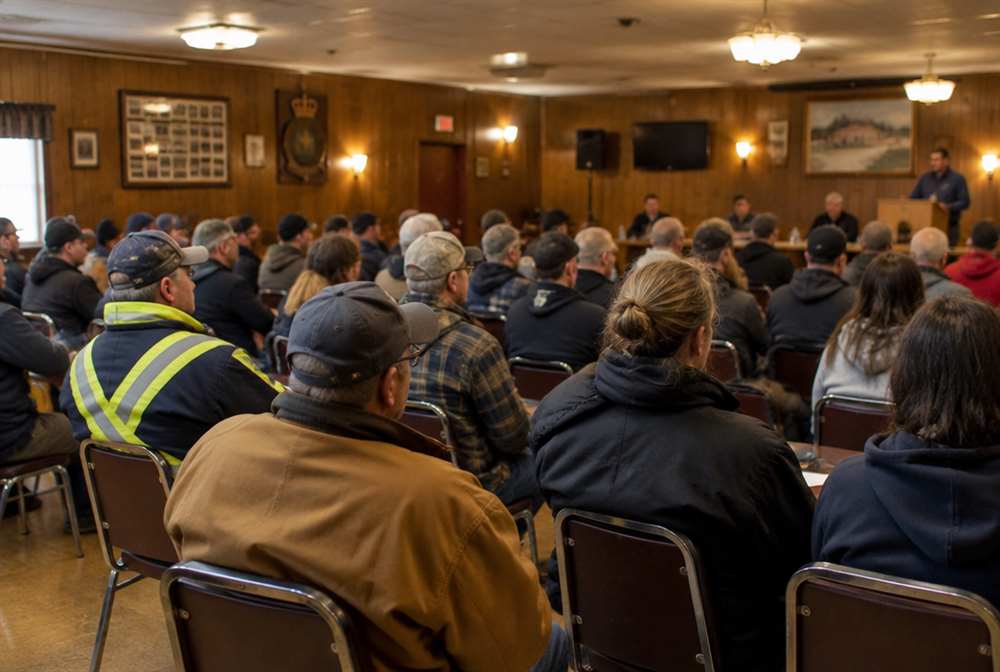
Local 230 has about 1,800 members. A local that size, in full voice, is a powerhouse. Here is how we get there, step by step, with the questions to ask along the way.
1. Fill the room
Everything else depends on turnout. Show up, bring one coworker, and ask that attendance be counted and reported every month.
2. Know who we are
A current membership roll, a steward list by yard, and ID for every member. You can’t organize, vote or help people you can’t reach.
3. Teach the new people
New operators who are taught safe practice and their rights by the union stay with the union. Mentors, not just a handbook.
4. Organize the rest
Non-union ready-mix, aggregate, trucking and paving crews in the GTA are our future members. Members know who they are. Organizing goes through the hall and the Labour Board process.
5. Keep the ones we have
Members who feel ignored drift away. A steward list, a reply-in-writing promise, and a simple case log fix more than any speech.
6. Watch the fund
Ask, respectfully and in writing: what is held, where, what return after fees, what fees, who decides, is there a written investment policy? Every 1 point of return or fee on $500,000 is $5,000 a year (the fund’s size, as members describe it, is unconfirmed).
Smart tools, humans in charge. Reminders and sign-up by text, a phone line that answers after hours, plain-language guides to the agreement, a case tracker members can see, and attendance reports. These save money and time and make the union easier to reach. They never replace a steward’s judgment, and members’ information stays private.
“Best offer” is a claim. Check it.
The deal on the table is $37.80 now, then $1.50 more every April 1. That is a raise of 4.1%, then 4.0%, 3.8%, 3.7% and 3.5%, reaching $43.80 in April 2030. Here is how it measures up, with our math shown so you can check it.
- It keeps pace. It doesn’t catch up.Inflation in Canada was 19.1% over the last five years, about 3.6% a year (our math from Statistics Canada, August 2026). Those raises are close to that pace: ahead at first, level by the end. Nothing in the schedule makes up for the last five years.
- No inflation protection.Teamsters 213 in B.C. has a clause at Lafarge Cardinal Concrete (2024–2028) that lifts wages to inflation when inflation beats the raise. A flat $1.50 has no such clause. If inflation jumps, the raise doesn’t.
- The gap is real.B.C. mixer top rate is $47.09 (Heidelberg, Greater Vancouver, 2026). Chicago is US$56.33, under the construction contractors’ agreement, not a ready-mix producers’ contract. We reach $40 an hour in April 2028.
- The balance sheet.CRH, which owns Dufferin, reported net income of US$1.5 billion for the second quarter, up 13%. Amrize, formerly Lafarge, reported US$476 million, up 14.4%. Votorantim, parent of CBM, earned R$628 million, down 65% from a quarter that included a one-time gain, and is not up after inflation since 2012. See the “What the companies made” section, with caveats.
- “It’s the best we can do.”A company that says it can’t pay more is generally expected to show its numbers at the table. Ask your business agent: was financial information requested, and what was provided? Put the request in writing.
What the public record says.
Convictions and fines against the companies our members work for or alongside, as reported in the news. Newest first. Every line links to its source.
-
Sep 14, 2026FatalitySt. Marys Cement Inc. (Canada)Bowmanville cement plant. Mitch Watson, 20, an apprentice millwright employed by a contractor, was killed on Mar 21, 2023 when a hopper gate closed during maintenance. Charge: as constructor, failed to ensure blocking was in place.Pleaded guilty. Fined $475,000 plus 25% victim surcharge. Source: Durham Post
-
Oct 8, 2021Critical injurySt. Marys Cement Inc. (Canada)Bowmanville cement plant. A worker was critically injured in Oct 2019 stepping on an unsecured access hatch cover.Fined $165,000 plus 25% surcharge. Source: ConstructConnect
-
Dec 20, 2023InjuriesLehigh Cement Limited (now Heidelberg Materials Canada)Picton cement plant. Three contract workers were hurt in a flash fire in Sept 2021.Guilty. Fined $190,000 plus 25% surcharge. Source: County Live
-
Sep 20, 2019FatalityLafarge Canada Inc.Zorra cement plant. A worker fell 30 feet from a corroded walkway and died on Aug 23, 2017.Pleaded guilty. Fined $400,000. Source: Global News
-
Oct 12, 2017InjuryLafarge Canada Inc.Bath cement plant. A contract worker was electrically shocked (47,500 volts); lockout failures.Guilty. Fined $115,000 plus 25% surcharge. Source: Electrical Industry
-
2023EnvironmentalLafarge Canada Inc.Bath cement plant. Environmental Protection Act: clinker dust covered vehicles and homes after a 2019 mechanical failure.Fined $200,000. Source: Link2Build
-
Jul 31, 2018InjuryCRH Canada Group (Dufferin Construction division)Hamilton road job. A worker was run over by a grader with a dead back-up alarm in Oct 2016. Road construction, not ready-mix.CRH fined $90,000; the equipment owner $5,000, plus surcharges. Source: Safety Mag
Orders, fines and follow-up.
Convictions and fines for employers in our trades across the GTA and central Ontario, newest first, from the last 10 years. Each line links to its source. This list is updated daily as new ones are published.
-
2026-03-26Safety (OHSA)Aecon Utilities Inc.King City (York). Jul 30 2024: worker trapped in trench by rain/silt slurry fatalityFine: $175,000 SourceConviction date as printed in the article; the exact court date was not confirmed.
-
2025-01-16Safety (OHSA)Frontline Cable and Gas Services Inc.Campkin St & Mill St S, Brampton (Peel). Worker fatally injured repairing hydraulic leak on Ditch Witch JT9 drill; machine lowered, no blockingFine: $110,000 +25% surcharge Source
-
2025-02-05Safety (OHSA)Brampton Brick LimitedBrampton (Peel). Worker cleaning mold inside block machine without lockout; coworker moved controls; critical injuryFine: $65,000 not stated SourceReported as a further conviction for this company (a separate fatality case is also reported; it is not listed here because we could not read that report).
-
2025-01-21Safety (OHSA)Hydro OneHowick-Turnberry Rd near Gilmour Line, Wingham. Copper lead dropped onto live 4.8 kV line; worker critically injuredFine: $250,000 +25%; supervisor $12,000 Source
-
2024-11-29Safety (OHSA)Direct Underground Inc.Rossland Rd, Ajax (Durham). Aug 8 2022: trench wall collapse, 2 killed, 2 injured; no shoring/slopingFine: $250,000 Source
-
2023-07-12Safety (OHSA)D & A Road Services Inc.Finch Ave W between Jane and Keele, Toronto. Apr 15 2021: pedestrian entered work zone, struck by dump truck; no fence (Reg 213/91 s.65)Fine: $125,000 Source
-
2019-11-06Safety (OHSA)Coco PavingSimcoe St & Kellett St, Port Perry (Scugog, Durham). Excavator boom contacted overhead energized conductors during Durham sanitary forcemain install; no injuries; spotter assigned previous day was absentFine: $50,000 +$12,500 surcharge (total $62,500) SourceThe Ministry described this as the company's 4th safety conviction, including two fatalities.
-
2019-07-12Safety (OHSA)Torrent Shotcrete Canada Ltd200 Woodbine Ave, Toronto. Worker fell into hopper of concrete pump while cleaning; auger running; safety sensor and grate had been defeatedFine: $130,000 +25% surcharge Source
-
2019-06-10Safety (OHSA)Waynco LimitedWaynco pit, Cambridge. Worker struck by rock-crushing equipment; energy isolation/lockout not done; fatalFine: $110,000 not stated Source
-
2019-11-05EnvironmentalCoco Paving Inc.Asphalt plant, Belleville. Ministry responded to public complaint of smoke; company was burning waste from its processes without ministry approvalFine: $10,000 +$2,500 victim fine surcharge Source
-
2018-09-28Safety (OHSA)Coco Paving Inc.Hwy 7 near Sciberras Rd, Markham (York). Worker welding steel casing alone on shoulder; casing (~5,400 lb) moved by forklift rolled into ditch and pinned worker; fatalFine: $350,000 +25% victim fine surcharge SourceReported by two trade outlets; the Ministry's own page could not be read. Reported as $325,000 in headlines and $350,000 elsewhere.
-
2017-06-19Safety (OHSA)Vaughan Paving Ltd.Bullock Dr strip mall, Markham (York). Worker struck by reversing equipment during curb/sidewalk work; died in hospitalFine: $125,000 +25% surcharge Source
-
2016-10-12Safety (OHSA)Utility Force Inc.Eglinton Ave & Caledonia Rd, Toronto. Worker entered unsupported trench to clear dirt from pipe and was buried by collapse; second cave-in during rescue; fatalFine: $75,000 not stated Source
Women. LGBTQ+ members. Every one of us.
Women and LGBTQ+ members work, drive and build beside everyone else, and this union is stronger for it. This corner collects your rights and some places to turn. In October our logo goes pink for Breast Cancer Awareness Month.
Your human rights
Ontario’s Human Rights Code protects you from discrimination and harassment because of sex (including pregnancy and breastfeeding), sexual orientation, gender identity and gender expression. The deadline to file at the Human Rights Tribunal is one year. The Human Rights Legal Support Centre gives free legal help. The Ontario Human Rights Commission (416-326-9511, 1-800-387-9080) gives information but does not take individual complaints.
Harassment and violence at work
Under Ontario’s Occupational Health and Safety Act, employers must have written workplace violence and harassment policies and programs, with ways to report and investigate. A worker who alleges harassment must be told the results and the corrective action in writing. Tell your steward as well. Ministry of Labour, 24/7: 1-877-202-0008.
Pregnancy and parental leave
Under the Employment Standards Act you are eligible after 13 weeks of employment. Pregnancy leave is up to 17 weeks. Parental leave is up to 61 weeks after pregnancy leave (63 otherwise). Both are unpaid, you return to the same or a comparable job, benefit plans continue and seniority keeps building, and you cannot be penalized for pregnancy or taking leave. EI is separate: Service Canada 1-800-206-7218. Ask the hall how the benefit plan handles your leave.
Gear that fits
Canada’s workplace-safety centre cites a 2022 CSA survey of about 3,000 Canadian women: 58% wore the wrong size, 28% avoided PPE because of fit, and about 40% reported injuries from poor fit. Ask for PPE that fits, and put the request in writing.
Women in the trades
The Teamsters Ontario Women’s Caucus exists, and you join through its public Facebook group. OBCTradeswomen offers mentoring and free training. It is part of the building trades council, not a Teamsters body.
LGBTQ+ members
Pride at Work Canada has a Know Your Rights guide for LGBTQ2+ employees. The 519 in Toronto offers support (416-392-6874). We have not found a Teamsters Canada committee specifically for LGBTQ+ members: if you know of one, or want one, tell us or ask the hall.
Pink October
October is Breast Cancer Awareness Month. The CIBC Run for the Cure supports the Canadian Cancer Society on Sunday, October 4. If you are due for a screening or have been putting it off, talk to your doctor: cancer.ca has information and support.
What every new operator should be shown.
You should not have to learn a loaded mixer truck by guessing. This guide lists what a new operator should be taught, with sources where we have them. Where something depends on your truck’s make and model, it says so: your truck’s manual and your company’s procedure come first. Nothing here replaces training from a competent trainer.
Before your first solo day
Ask: Who is my trainer, and how many years have they driven? How many supervised hours before I go solo? Where is my truck’s operator manual and pre-trip checklist? Who do I call if something goes wrong? Is my training written down and signed? Ontario also expects basic health and safety awareness training for every new worker.
Rollovers
A mixer carries a moving load high off the ground. Concrete Ontario’s rollover guidance says the forces depend on the slump, the drum speed, whether you are loading or discharging, and the site. It warns about soft shoulders and suggests staying back 1 metre from excavation and ramp edges (an industry policy, not a law) and keeping the drum at 1–2 rpm in transit. No speed is safe for every truck, curve or ramp: slow down for ramps and turns.
Chute and backing
Industry safety bulletins say: lock the chute before discharging, chain extension chutes, never stand on the chute, and use one trained spotter when backing. Never back with anyone between the truck and a solid object. Near power lines Ontario’s table (O. Reg. 213/91, s. 188) sets clearances of 3 m for 750–150,000 volts, 4.5 m up to 250,000 and 6 m above that, and a signaller is required when a cement truck could touch the limit.
Gear, engine speed and discharge
How your truck should be set up to discharge (gear, power take-off, engine speed, parking brake, chocks) depends on the make and model. We found no general rule to give you, so do not guess and do not copy someone else’s habit. Ask your trainer to show you where your truck’s manual says it, and have it shown to you on the truck.
The drum and its bolts
Check the drum mounting during your pre-trip the way your manual says. This is not theory: a January 2024 U.S. safety recall covered some trucks where the bolts connecting the drum to the drive plate could loosen and the drum could separate from the truck. Check your truck’s recalls by VIN with the maker, and report any loose, missing or damaged fastener the same day, in writing.
Water on the truck
Industry guidance says add water only within the specified limits, before significant discharge, and record it on the ticket. After adding water, mix the extra drum revolutions your producer calls for (the national guidance says 30), and do not add water once discharge is well under way. Who may authorize water is agreed with the customer and your producer, so ask. Bring enough clean wash-down water for the day. Truck tank water is not drinking water.
PPE and your skin
Hard hat, safety boots, high-visibility clothing, eye protection and gloves. Wet concrete burns skin, and the pain can come late: wash with fresh water right away. Never reach into the drum, and never rush a wash-out.
Heat, cold and weather
New workers need time to adjust to heat: drink water, take breaks, and tell your supervisor if you feel unwell. Heat also makes concrete stiffen faster, which tempts people to rush. For winter and slippery sites, ask your trainer for your yard’s rules in writing. We found no Ontario standard to quote.
Hazards: your duty and your rights
Under the Ontario Occupational Health and Safety Act (s. 28), a worker must report known defective equipment and any hazard to the employer or supervisor. Do it in writing: date, time, truck number, what you saw. Keep a copy and give your steward and the hall a copy too, so the union has the record. If it is not fixed, keep pushing. You also have a right to refuse unsafe work, and reprisal is against the law. The Ministry of Labour line is open to you at any time, 24 hours, without giving your name: 1-877-202-0008. You do not have to wait on anyone to use it.
Your union, from day one
Meetings are monthly: Oct. 25, Nov. 22 and Dec. 20, 9:30 a.m. Eastern at the Legion. Quorum means enough members present to make decisions. Votes on contracts and strikes are for members in good standing, so ask the hall before you take a withdrawal card (see Short on hours?). If something is wrong, write it down, tell your steward, and ask about the time limits for a grievance. Slow season and layoffs: see Short on hours?.
Know your hours. Know your limits.
Working extra shifts and Saturdays can be good money. It can also be perfectly legal. What matters is the count: how many hours you are really on duty, and whether you have the rest the rules require. Here are the Ontario rules for commercial truck drivers, from the Ministry of Transportation’s own truck handbook, and what we have not been able to confirm.
Who it covers
Hours-of-service rules apply to commercial vehicles over 4,500 kg. A loaded mixer is well over that.
The daily limits
13 hours of driving. No driving after 14 hours on duty. At least 10 hours off duty each day. No driving after 16 hours have passed since you came on duty.
The weekly clock
Most drivers run the 7-day cycle: no more than 70 hours on duty in 7 days. The other option is 120 hours in 14 days. On duty means all work time: driving, waiting, washing out, loading and paperwork.
Resets
36 hours in a row off duty resets the 7-day cycle. 72 hours in a row resets the 14-day cycle. You also need 24 hours in a row off within any 14 days. A late Saturday and an early Monday may not add up to 36.
Local drivers
A driver who stays within 160 km of the start and gets back the same day keeps simplified records instead of a daily log. We have not confirmed that the limits above are waived for them. Assume they still count until someone shows you the regulation.
Logging devices
Electronic logging devices have been required in Ontario since June 2022 for drivers who previously had to keep a daily log. Penalties began January 2023, with fines from $250 to $20,000. Records must be produced if the Ministry of Transportation or police ask.
Does your week fit? (7-day clock, 70-hour limit)
| Week | On duty | Inside 70? |
|---|---|---|
| Mon–Fri 9 h, Sat 8 h | 53 h | Yes |
| Mon–Fri 11 h, Sat 9 h | 64 h | Yes, close |
| Mon–Sat 11.5 h | 69 h | Barely |
| Mon–Sat 12 h | 72 h | No |
To start again Monday, the weekend must also give you 36 hours in a row off duty. The daily limits (13, 14 and 10) apply on top.
Pay and overtime
Under the Employment Standards Act the weekly limit is 48 hours unless you agree in writing, and you can cancel that agreement with two weeks’ written notice. For truck drivers, overtime pay starts later than 44 hours: after 60 hours for highway transport and 50 for local cartage, counting only hours you are responsible for the truck. Your collective agreement may do better, so ask your steward to show you the page.
What we have NOT confirmed
Whether ready-mix drivers have any exemption from the hours-of-service limits, and whether the Employment Standards Act’s construction exemption covers ready-mix. We could not read the regulation text. Ask the Ministry of Transportation, Employment Standards or your hall in writing, and tell us what they say.
What you can do
Add up your real on-duty hours for the last 7 days. Keep your own written record. If you are over the limit or too tired to drive safely, you can refuse unsafe work, and reprisal for raising a safety concern is against the law. Ministry of Labour, 24/7: 1-877-202-0008.
Trained right, or not at all.
Members tell us new hires are being sent out too fast, with whoever is available as a trainer and no set standard. Nobody should learn a loaded mixer truck on the job with traffic all around. Here is what we know, and what we are asking for.
What members report
New drivers rushed onto routes, trained by whoever is free, with no clear rule on who trains them or for how long. These are member reports, not findings about any named company.
What the law says
Ontario employers must provide information, instruction and supervision, and make workers aware of hazards (Occupational Health and Safety Act, s. 25(2)). Ontario’s own guide says basic awareness training does not replace those duties. You also have the right to refuse unsafe work, and reprisal for raising a safety concern is against the law.
What the industry just did
In February 2026, Concrete Ontario announced the first standardized training program for new ready-mix drivers: a 160-page manual in five modules, two exams and a certificate valid five years. Funding for hands-on, behind-the-wheel training is still only a 2027 application. Source: ConstructConnect.
What we are asking for
Trainers with 10 or more years of real experience, taught how to coach. A set number of supervised ride-along hours before anyone goes solo. Defensive driving built in (the Smith System’s five keys are one well-known example: aim high in steering, get the big picture, keep your eyes moving, leave yourself an out, make sure they see you). A signed training record for every new hire.
Would it help?
We believe so: fewer close calls, fewer damaged trucks and complaints, a company people want to stay at, and a stronger union. We can’t promise numbers. Evidence for any single program is limited, which is why we ask for a strong standard and a record you can check.
Ask your steward and the hall
Who trains new hires here, and how many years have they driven? How many supervised hours before going solo? Is there a signed training record? Does the agreement say anything about training? Ask in writing and keep the answer.
Retirements, anniversaries, new members. We notice.
The official site doesn’t tell you when one of ours hangs up the keys after 20 years. We do. This is the corner for the good news: a retirement, a 10-, 20- or 30-year anniversary, a first day on the job, a new baby, a safe-work milestone. Every year at the yard counts, and so does every member.
Recently
An Innocon operator just retired after 20 years behind the wheel, at 69. Congratulations, brother, and thank you for the work. We hope the next chapter is a long one.
Tell us yours
Know someone who just hit a milestone, or want to share your own? Post it in our private Facebook group (you can post anonymously) or add your name below and say which yard you work at.
How we handle it
We use first names or no names, unless the member says yes. No photos of anyone without their OK. Good news only here: for the ones we’ve lost, see We honour them.
Our brothers and sisters we have lost.

Every worker has a name. We remember the members of our Local, and the workers killed at the companies we work beside. Day of Mourning is April 28.
Members of Local 230
- Jack FerreiraBrother, friend and Business Representative, Local 230Born Aug 26, 1957. Died Sept 11, 2016, after a long battle with cancer. He was 59. Notice
- Marco PoscaBrother and Union Business Agent, Local 230. Twelve years at Innocon Ready-Mix, then four years as a full-time Business Agent.Passed away suddenly. Announced April 24, 2020. Local 230 wrote that his "zeal and total commitment to serving our Members first" would be missed. Notice
Workers killed on the job at our employers’ sites
- Mitch Watson, 20Apprentice millwright. Killed March 21, 2023 at the St. Marys Cement plant in Bowmanville. Source
- Jacques LambertContract hauler. Died August 8, 2016 at a Lafarge site in Gloucester (Ottawa) clearing concrete from a ready-mix truck. Source
- A worker at the Zorra cement plantFell 30 feet and died on August 23, 2017. Source
Everyone’s pocketbook. A plan, step by step.

Prices went up and pay didn’t keep pace. Nobody here should be ashamed of bills piling up, and nobody has to sort it out alone. Free help, and a simple order to do things in. Work through it at your own pace.
- Claim what’s already yoursFederal and Ontario benefits and credits go unclaimed every year. The Canada Revenue Agency benefits line is 1-800-387-1193; Ontario Trillium Benefit: 1-877-627-6645. File your tax return every year, even with low income, because many credits are paid only if you file. Free tax clinics (CRA Community Volunteer Income Tax Program) will file it for you.
- Cut the hydro and heat billOntario Electricity Support Program (OESP): monthly credits on your hydro bill for lower-income households. 1-855-831-8151 · oesp.ca. The Ontario Energy Board’s LEAP program gives one-time help if you’re behind on your electricity or gas bill; you apply through a local agency (call 211 to find yours).
- Free, non-profit help with debtCredit Canada: 1-800-267-2272. Counselling is free to start, and no one should charge you up-front fees to “fix” your debt. The Financial Consumer Agency of Canada has free budget and credit-card tools. If it’s past that point, a licensed bankruptcy trustee (directory at the Office of the Superintendent of Bankruptcy) will go over your options in a free first meeting.
- In a jam right nowDial or text 2-1-1 for food banks, rent and utility help near you. Daily Bread Food Bank has a Toronto-area finder. Ontario Works emergency help: 1-888-999-1142. Off work sick or laid off? Employment Insurance sickness and regular benefits: apply as soon as you stop working.
- Then start buildingA small emergency fund first, even $20 a week, so one bad week doesn’t become a crisis. After that, the main accounts are the TFSA (tax-free growth), the RRSP (tax break now) and, for a first home, the FHSA. Learn how they work from neutral sources: GetSmarterAboutMoney.ca (Ontario Securities Commission). Check your own contribution room in your CRA My Account.
Your pension
The Teamsters and Toronto & Vicinity Ready-Mix Producers’ Pension Plan, administered by Ellement Consulting Group. You should get an annual statement. Member portal: ellementmemberportal.ca. Read your statement. It is your money.
Money stress is health stress
Call or text 9-8-8 any time (Talk Suicide Canada). ConnexOntario: 1-866-531-2600, free and confidential, 24/7.
Protect yourself from scams
Anyone promising guaranteed returns, or pushing you to move money fast, is a red flag. Check before you invest. The Canadian Anti-Fraud Centre lists the warning signs, and a fee-only or advice-only planner (not someone who earns commission) can look at your whole picture.
Ask us
Not sure where to start? Use the sign-up form and tell us what you’re up against. It stays private, and a member will get back to you. Ask for money help
Meeting reminders.
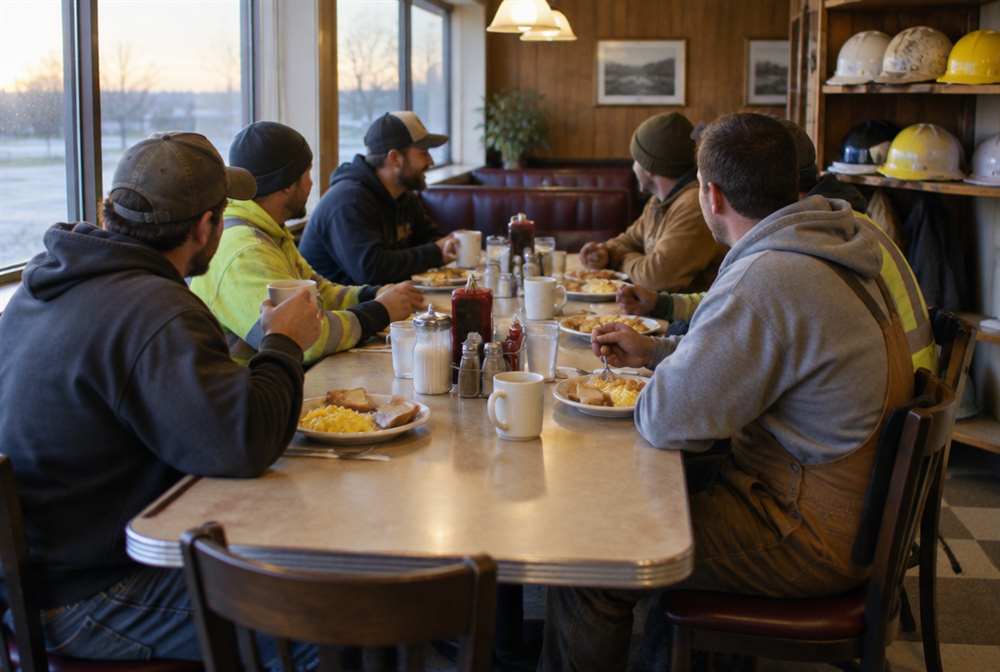
Add your name and phone in the sign-up form and we’ll remind you before every meeting. Text reminders are being set up. When they start, you’ll get one text asking you to reply YES, and nothing is sent unless you do. You can reply STOP any time. Your number is private, used only for meeting reminders, and never shared or posted.
Add my name & phone Request to join our private Facebook groupTell it. We’ll keep the record.
Management ignoring the labour laws. Common practice not followed. Someone punished for doing the right thing. If it happened to you or you saw it, write it down. When enough of us tell the same story, it can’t be brushed off as one person’s complaint.
What to include
What happened, roughly when, which yard or crew, and what the rule or practice should have been. Dates and what was said or written help most. Keep copies of texts, emails, schedules and paystubs.
Your protection
You can post it anonymously in the group. We don’t publish names of members, and nothing goes up without being checked. Reprisal for raising a safety or employment-standards concern is against the law in Ontario: see who to call.
We publish stories as patterns, not accusations: “members report…”, with the details trimmed so no one can be identified, and no individual supervisor named. Stories we can’t check stay private and still count toward the pattern.
Two ways to send it: post it anonymously in our private Facebook group (Facebook hides your name and photo from members when you use “Anonymous post”), or add your name to the list below and say which yard you work at.
Post in the group (anonymous) Add my nameStuck? Here’s who to call.
If you can’t get an answer from your steward, work down this list. You’re not on your own.
- Your stewardStart here. Put it in writing (text or email) so there’s a date on it.
- Your business agent / the hall431 Alden Rd, Markham · 905-415-5139 · 1-888-339-3330 · [email protected]
- Safety problemOntario Ministry of Labour, 24/7 line: 1-877-202-0008. You have the right to refuse unsafe work.
- Injured at workWSIB: 1-800-387-0750
- Union won’t represent you fairlyThe Ontario Labour Relations Board handles fair-representation complaints: 416-326-7500 · 1-877-339-3335 · olrb.gov.on.ca. There are time limits, so don’t wait.
Still stuck? Use the sign-up form above and tell us what’s going on. A member will get back to you. Your message stays private.
Ask for help